

Renewing political economy
Adam Smith treated political economy as “a branch of the science of a statesman or legislator” (The Wealth of Nations, Book IV, Introduction). In our view, academic economics has since shed much of that context, above all since the mathematical formalism of Samuelson: the political and social exchange that surrounds every transaction. The result, we argue, has weakened economics as an instrument of policy and allowed received wisdom to stand in for analysis. This programme asks how politics shapes the economy and how the economy shapes politics, and how a renewed political economy might do better. It draws together the public sphere, in which every policy is contested; the meso world of institutions, the missing middle between the individual and the economy as a whole; how people actually behave and decide; and how we reason, infer and act under uncertainty. It also examines the state’s own machinery: the constitutional settlement, the operations of government and the never-ending policy process. Our working answer is crito-liberalism, a liberalism updated for what has since been learned, which treats the individual as a socially situated being.
Questions we are pursuing
What happened to political economy as a science of the statesman or legislator, and what would restore it?
What is the proper role, scope and purpose of the state in the twenty-first century?
How do institutions shape behaviour, and why does so much policy ignore them?
How do people actually behave and decide, and how should policy allow for bounded rationality and ignorance?
Is the machinery of government capable of designing and delivering the reforms it attempts?
Is the electoral system itself a source of the short-termism that distorts policy?
Priority reviews
The logic of state action in the twenty-first century: it establishes the purpose of raising revenue and of spending, and the feasibility of change.
Electoral reform: it tests whether the electoral system is itself a source of short-termism.
Reform of the machinery of government: it addresses whether the state has the institutional capacity to design and deliver every other reform.
Explore this programme
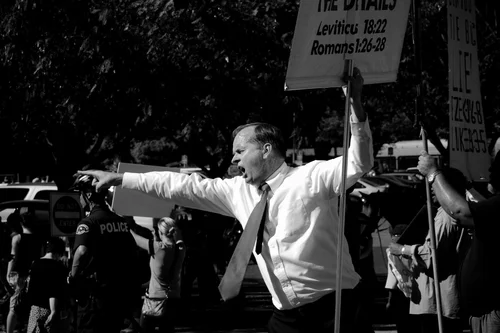 The public sphere, political economy and public policy
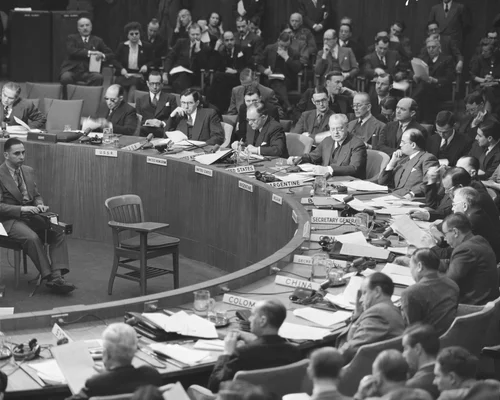 The meso world: institutions
 Reason, inference, knowledge, belief and uncertainty
 People, behaviour and action
 Constitutional issues
 The operations of government
 The public policy process
 Crito-liberalism
 Renewing political economy
Publications
- Briefing note Crito-Liberalism: What It Is and Why It Is Necessary
- Briefing note Polycrisis and the Failure of Political Economy
- Paper Comfortable Errors: The Myths that Disable British Government
- Blog A brief history of the disintegration of political economy and its purpose
- Blog Do we need a new New Political Economy?
- PDF Futuresphere Unbound, part 5: Locating change: mesoeconomics
- PDF Futuresphere Unbound, part 6: Determining a policy direction: crito-liberalism
- PDF Futuresphere Unbound, part 7: The mesoeconomic challenge
- PDF Futuresphere Unbound, part 8: New New Political Economy
- PDF Futuresphere Unbound, paper A: Moving the needle
Forthcoming
- The Enlightenment and the Foundations of Liberal Democracy
- Classical and Social Liberals in the Liberal Democrat Parliamentary Party