

The operations, machinations and
manifestations of government
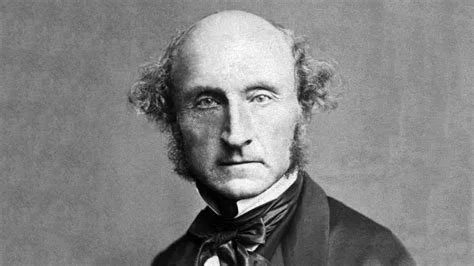
The great John Stuart Mill (1806 — 1873) is usually credited with being the first writer to deploy the phrase ‘the machinery of Government in his 1861 Considerations on Representative Government. And quite deservedly. Except he didn’t actually use that phrase. He wrote about “political machinery,” and “the machinery of authority”; he even talks about popular elections, in politically corrupted societies, “instead of a security against misgovernment, [being] but an additional wheel in its machinery.” He talks about the administration of justice and there being “no part of public business in which the mere machinery, the rules and contrivances for conducting the details of the operation, are of such vital consequence.”
So, no, if we were being pedantic, he didn’t use the exact phrase, but he clearly established the metaphor which remains actively in use today and on a topic just as important, in not more so, than it was 165 years ago. Such was Mill’s staure that he casts a very long shadow in which there is still ample room to manoeuvre; but we must never discard him nor assume that all the lessons he has to teach us have been learned and understood.
Revisiting the roles of the state
We need to ask ourselves continually how big a state should we have. While there is no single right answer, a reasonable response would be ‘as big as we need it to be and no larger.’ This moves the question from the relative scale of the state to the roles we want the state to perform. While the answer to that question will vary according to whom you ask, there are (fairly) clearly defined econommic roles of the state. We will use the answer of Charles Rowley & Tony Peacock (1975): (i) allocative; (ii) distributive (including re-distributive); (iii) regulatory; and (iv) stabilisatory. For most people, that moves us no closer to an answer. It’s utility is in its formality. For example, the state does not make things. Secondly, there is an explicit awareness that allocation is not the sole province of the market; the state aslo has a role in allocative decision-making.
As always, we need to recognise that economic theory does not give us the answers; it merely helps us to ask the right questions.

Size matters: how big a state should we accept?
In his inaugural address in 1981, Ronal Reagan outlined the depth of the economic crisis facing American, being persistent low-growth inflation (no called stagflation) pursuant to the oil embargo of by OAPEC in 1973 and the Iranian Revolution in 1979. He then stated:
❝ In this present crisis, government is not the solution to our problem; government is the problem. From time to time we've been tempted to believe that society has become too complex to be managed by self-rule, that government by an elite group is superior to government for, by, and of the people. ❞
Yet the US Federal Govenmnent continued to grow, as did the federal deficit. 45 years later, through the machinations of government shutdowns and the emergence of the Tea Party, that deficit continues to grow,

Renewing political economy
We are in deep trouble in that we face mutliple, simultaneous, inter-related and compounding problems socially, politically and economically. The term of art to define this situation is polycrisis. How did we get to such a place?
We believe that at least some of the problem is attributable to the failure of economics to address real policy issues. Given that, in 1776, Adam Smith described political economy as “a branch of the science of the legislator or statesman,” we have clearly moved away from what Adam Smith believed he was talking about. And so we have. Over two-and-a-half centuries, political economy has fractured in to separate disciplines of poltical science and political sociology, economics and, from the 1950s, public administration. We need a renewed political economy to re-adhere the separated arms of political economy and, again, make it useful to legislators and policy makers.

Taxation: the ultimate UK failure story
Text

Regulating regulation & regulators
Text

What does the state do well?
Text

A minimalist versus a maximalist state
Text

Held to account? The numbers don’t lie — except when they do
Text

Are we witnessing the sunset of the comprehensive state?
Text