

Theme 9
People, behaviour & action

Human action
As a species, everything we have achieved in the world, everything we are achieving and everything we will achieve come about through human action. Why do we act as we do? What motivates us? What constrains us? How do we decide to act? Individually? Or in groups?

‘Undersocialised man’ or autonomous actor?
Economics has long modelled the person as an autonomous actor, pursuing given preferences with little regard to the people around him or her. Sociology has often made the opposite error, treating behaviour as the product of norms that people have internalised. In 1985 the sociologist Mark Granovetter called the first conception “undersocialised” and the second, following Dennis Wrong, “oversocialised”, and argued that both neglect the same thing: the ongoing social relations in which economic action is embedded.
The distinction matters for policy. A policy designed for the autonomous actor relies on prices and incentives; one designed for the oversocialised person relies on exhortation. Both fail where trust, reputation and the obligations of particular relationships determine what people actually do.
We hold that policy be designed for people as they are: responsive to incentives, shaped by norms, and bound by relationships that no model captures fully.

How do people behave? And, more importantly, why?
The rational actor of economic theory maximises expected utility with full information. Herbert Simon argued in 1955 that real decision-makers do something different: with limited information and limited capacity to compute, they search until they find an option that is good enough, a condition later known as bounded rationality.
Daniel Kahneman and Amos Tversky documented in 1979 systematic departures from expected-utility theory: people weigh losses more heavily than equivalent gains, overweight small probabilities, and choose differently when the same choice is presented differently.
Why people behave in these ways is a harder question than how. The answer lies partly in cognition, partly in emotion and partly in the social settings in which choices are made. Policy that ignores any of the three will misjudge the people whom it is meant to serve.

Acting in ignorance, knowingly and unknowingly
Unskilled and unaware
Some ignorance is known to the person who acts; some is not. Justin Kruger and David Dunning reported that participants who scored lowest on tests of humour, grammar and logic greatly overestimated their own performance, and argued that incompetence deprives people of the very ability needed to recognise it (Kruger and Dunning 1999). The greater danger for policy is therefore not the decision-maker who knows the limits of his or her knowledge but the one who does not.
We ask how institutions might detect and correct the ignorance of which those acting are unaware.

The concept of mental constructs
Relativism, subjectivism and personal constructs
Three ideas are often confused. Relativism holds that truth or value is relative to a culture or framework; subjectivism holds that it depends on the individual who judges. George Kelly’s personal construct theory claims neither. Kelly held that each person anticipates events through his or her own system of constructs, which he or she tests, like a scientist, against experience and revises when they fail: a position he called constructive alternativism (Kelly 1955). Constructs can therefore be better or worse at anticipating what happens.
We ask what this implies for understanding why people, and policymakers, interpret the same evidence differently.

Bounded rationality: is it still a valid construct?
From computation to concepts
Herbert Simon proposed in 1955 to replace the global rationality of economic man with a model of choice compatible with the access to information and the computational capacities that decision-makers actually possess (Simon 1955). Computational capacity has since grown enormously, and for many decisions calculation is no longer the binding limit. The limits that remain are chiefly those of knowledge and of concepts: what we do not know, and what we have not thought to ask.
We argue that the term has nonetheless become entangled with the later literature on heuristics and biases, and is too often invoked to excuse the absence of formal method in decision-making. We ask what a more formal approach to decisions taken at the limits of knowledge would require.

Examining methodological individualism
Two meanings, one name
Methodological individualism is used in two senses. In the first, which Francesco Di Iorio defends, social phenomena are explained through the actions and interpretations of individuals who are themselves shaped by their social and cultural setting; so understood, it implies neither an atomistic view of society nor a mechanical determinism (Di Iorio 2015). In the second, and more common, sense the term stands for the atomistic, ‘undersocialised’ actor of economic models, detached from the relationships around him or her.
A further, moral, individualism comes from Kant, for whom moral obligation is a law that each rational agent imposes upon himself or herself (Kant [1785] 2012). Autonomy in Kant’s sense is self-governance under a law binding on every rational being: a claim about the moral standing of persons, not a method of explanation.
We hold that these senses be kept distinct, and we ask what each implies for policy.
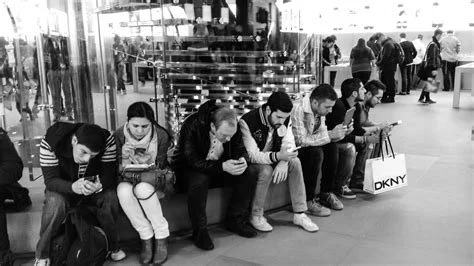
Emo ergo sum; I shop, therefore I am
Have we in the developed world become simply Homo emptor? Shopping is more than a procuring activity. It is also a leisure activity, a distraction, a social activity, for some, a compulsion. And if we have, what does that tell us? If we have, is that a problem?