

Polycrisis and change
We are beset by crises in many spheres at once, political, social, economic and environmental, while productive technologies shift beneath us. Edgar Morin and Anne Brigitte Kern gave the predicament a name, polycrisis, in Terre-Patrie (1993). Crises that interact are not solved one at a time, and the responses that have served before may now make matters worse. This programme examines how such conditions arise and why they persist: the capture of institutions by those whom they should restrain, the contradictions of financialised capitalism, and the dissent that is both inherent in and essential to a healthy democracy. It asks what is special about the West, and whether the answer still holds. It also asks how anyone can look ahead responsibly. Prospective analysis is part art and part science, part history and part stochastic analysis; it must be projective, imaginative, disciplined and contingent. Time itself runs through the programme, because every forecast is an expectation formed now, from what we remember.
Questions we are pursuing
Why do the conditions of polycrisis arise, and why do they persist?
Is there a crisis of capitalism, and for whom?
What is special about the West, and is it in relative decline?
How should change, disruption and dissent be understood: as threat, as opportunity, or as both?
How can we anticipate the future more reliably, and how should we recognise the limits of what can be anticipated?
Priority reviews
None of the fourteen initial policy reviews falls wholly here; this programme’s work is thematic, and thematic reviews are chosen separately. What it means to be western, and what that means for the UK (see Britain in the world) draws directly on it.
Explore this programme
 Change, disruption and progress
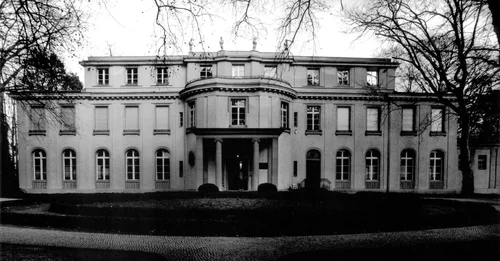 Capture, crises, contradictions and carbon
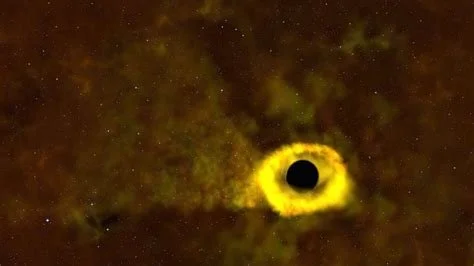 Time and space
 Polycrisis
 Prospective research
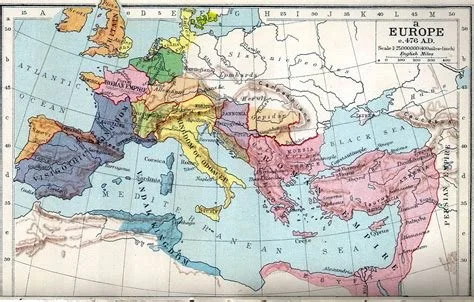 Thinking civilisationally
Publications
- Briefing note Polycrisis and the Failure of Political Economy
- Paper Comfortable Errors: The Myths that Disable British Government
- Blog Our current political entropy
- Essay Why do things fall apart?
- PDF Futuresphere Unbound, part 1: Polycrisis at four scales
- PDF Futuresphere Unbound, part 2: Factors inhibiting resolution
- PDF Futuresphere Unbound, part 3: Problem persistence
- PDF Futuresphere Unbound, part 4: Putative solutions
Forthcoming
- Futuresphere Unbound, part 9: A theory of change: what is change and how does it happen
- The Enlightenment and the Foundations of Liberal Democracy
Previous: Renewing political economy · Research · Next: Science, technology and AI