

Theme 3
Change, disruption & progress
Dissent is both inherent in and essential for a healthy democracy

The inevitability of change
Heraclitus of Ephesus, active around 500 BCE, is best known for the doctrines that things are constantly changing and that opposites coincide. For us the lesson is practical rather than metaphysical. Institutions, technologies and the preferences of those who live under them never stand still, and policy that assumes a stable world will sooner or later be overtaken by events. The question is never whether change will come, but whether it will be anticipated, shaped and governed, or merely suffered.

Progress, regress & retrogression
Change is not synonymous with progress. It may improve the conditions of life or worsen them, and some change deliberately seeks to recover a position from which earlier change departed. We call this retrogression. Those who perceive themselves the losers from change, whether in income, status or identity, are its natural constituency; conservatives, including nationalist populists, often speak for them. The test of any proposal is not its direction of travel but its consequences, judged over time.

Models of and perspectives on change
Our theory of change draws on a long tradition of analysis, profiled below, rather than on any single school. From it we take several working propositions: much social order is the unintended result of human action; institutions shape incentives and change slowly; technological revolutions unsettle established interests before their benefits spread; and change provokes reaction that can stall or reverse it. Because the world is complex and path-dependent, we treat the lessons of history as hypotheses to be tested against observed effects, not as laws.

The importance of dissent
Descartes founded his philosophy on the one certainty that survived his doubt — je pense, donc je suis (1637); later summaries made the role of doubt explicit: dubito, ergo cogito, ergo sum. Doubt is where independent thought begins, and leading thinkers on democracy have treated dissent as one of its preconditions. Tocqueville warned of the majority’s power over thought (Democracy in America, 1835); Mill held that “all silencing of discussion is an assumption of infallibility” (On Liberty, 1859); and Sunstein argues that organisations and nations are more likely to prosper when they welcome dissent (Why Societies Need Dissent, 2003).

Change as opportunity
Change that destroys also creates. Schumpeter called the process by which new goods, methods, markets and forms of organisation displace old ones “creative destruction”, and held it to be “the essential fact about capitalism” (Capitalism, Socialism and Democracy, 1942). The gains are real but unevenly shared, and those who bear the losses seldom share the gains. The opportunity lies less in change itself than in institutions that allow a society to seize its benefits and to compensate, retrain or protect those whom it displaces.

Tolerance, intolerance & cohesion
In The Open Society and Its Enemies (1945), Karl Popper set out the paradox of tolerance: unlimited tolerance must lead to the disappearance of tolerance. A tolerant society must therefore reserve the right not to tolerate the intolerant. Popper’s own formulation is narrower than its popular use: while the intolerant can be countered by rational argument and public opinion, suppression would be unwise. Cohesion depends on drawing that line well. Drawn too tightly, liberal society betrays itself; drawn too loosely, it hands its enemies the means of its destruction.

Reaction to change
Writing in 1513–14, Machiavelli observed that “there is nothing more difficult to take in hand, more perilous to conduct, or more uncertain in its success, than to take the lead in the introduction of a new order of things” (The Prince, ch. 6). The reformer, he explained, makes enemies of all who profit from the old order and wins only lukewarm support from those who might profit from the new. The asymmetry still often holds: losses from change are concentrated and immediate, gains diffuse and deferred, and reaction is organised accordingly.
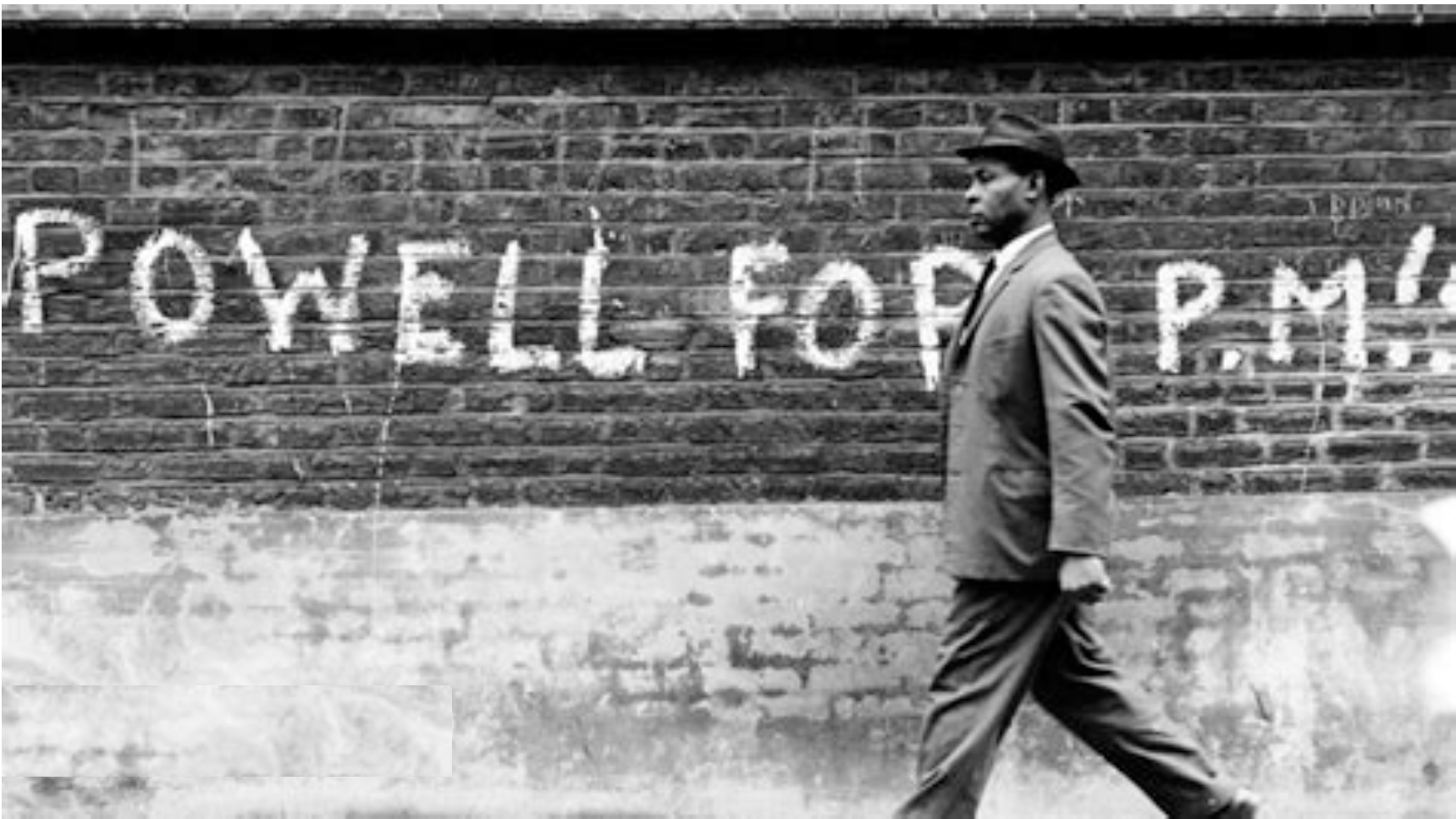
Is a multi-cultural society viable?
We regard a multi-cultural society as increasingly inevitable, especially in countries built on inward migration, such as the United States and Canada, or on empire, such as the United Kingdom and France. To sustain one, a host country must recognise what in its history, political culture and society offers something emotionally and intellectually powerful around which a diverse society can coalesce; that is the case for liberalism and for Popper’s open society. But procedural liberalism, like procedural democracy, is never enough. American pragmatism clarified ideas by tracing their practical consequences; in the same spirit, crito-liberalism requires that liberal procedures be judged by their results — here, by whether the performance of participant cultures converges over time.
Analysts of change
Heraclitus of Ephesus (active c. 500 BCE)
Greek philosopher
Known for: the doctrines of universal flux and the unity of opposites; change, not stasis, as the condition of the world.
Major work: a single book, surviving only in fragments quoted by later authors.
Ibn Khaldun (1332–1406)
Arab historian, jurist and statesman, born in Tunis; served the courts of Tunis, Fez and Granada, and later sat as a judge in Cairo
Known for: one of the earliest non-religious philosophies of history; an analysis of the nature of society and of social change, including the rise and fall of dynasties.
Major work: Muqaddimah (completed 1377).
Niccolò Machiavelli (1469–1527)
Florentine diplomat and political theorist; Second Chancellor of the Republic of Florence
Known for: analysing how power is won, held and lost amid fortune and change, and how liberty and conflict sustain republics.
Major works: The Prince (written 1513–14, published 1532); Discourses on Livy (c. 1514–19). Text ↗
Francis Bacon (1561–1626)
English philosopher, lawyer and statesman; Lord Chancellor under James I
Known for: an empirical, inductive method for natural philosophy, and the idea of organised research for the improvement of human life.
Major works: Novum Organum; New Atlantis.
Bernard Mandeville (1670–1733)
Anglo-Dutch physician and philosopher, born in Rotterdam and practising in London
Known for: arguing that prosperity depends on harnessing self-interested, even vicious, passions; the gradual, unplanned evolution of moral norms and institutions.
Major work: The Fable of the Bees: Or, Private Vices, Publick Benefits (from 1705; enlarged 1723; Part II, 1729). Text ↗
Adam Ferguson (1723–1816)
Scottish moral philosopher and historian; Professor of Moral Philosophy, University of Edinburgh (1764–85)
Known for: showing that institutions are “the result of human action, but not the execution of any human design”; a forerunner of modern sociology.
Major work: An Essay on the History of Civil Society (1767). Text ↗
Adam Smith (1723–1790)
Scottish moral philosopher and political economist; Professor of Moral Philosophy, University of Glasgow (until 1764)
Known for: explaining the growth of opulence through the division of labour, which is limited by the extent of the market.
Major works: The Wealth of Nations (1776); The Theory of Moral Sentiments (1759). Text ↗
Alexis de Tocqueville (1805–1859)
French political thinker, historian and politician; member of the Chamber of Deputies and Minister of Foreign Affairs (1849)
Known for: analysing the advance of democratic equality and its risks, and the continuities that survived the French Revolution.
Major works: Democracy in America (1835, 1840); The Old Regime and the Revolution (1856). Text ↗
Charles Darwin (1809–1882)
English naturalist
Known for: describing, with Alfred Russel Wallace, natural selection as the mechanism by which new species develop.
Major works: On the Origin of Species (1859); The Descent of Man (1871). Text ↗
Karl Marx (1818–1883)
German philosopher, economist and revolutionary, from the Prussian Rhineland; lived in London from 1849
Known for: historical materialism, in which forms of society rise and fall as they first further and then impede the development of productive power.
Major works: Capital, vol. I (1867); The Communist Manifesto (1848, with Engels). Text ↗
W. S. Jevons (1835–1882)
English economist and logician; Owens College, Manchester, and University College London
Known for: tying Britain’s industrial vitality to an exhaustible resource in a pioneering analysis of energy and growth; co-founder of marginal utility theory.
Major works: The Coal Question (1865); The Theory of Political Economy (1871). Text ↗
Thorstein Veblen (1857–1929)
American economist and social critic; University of Chicago, Stanford and Missouri; co-founder of the New School for Social Research (1919)
Known for: conspicuous consumption, and the conflict between industry, which makes goods, and business, which makes money.
Major works: The Theory of the Leisure Class (1899); The Theory of Business Enterprise (1904). Text ↗
Max Weber (1864–1920)
German sociologist and political economist; Freiburg, Heidelberg and Munich
Known for: the rationalisation thesis, and the Protestant Ethic thesis as a non-Marxist account of the origins of modern capitalism.
Major works: The Protestant Ethic and the Spirit of Capitalism (1904–05); Economy and Society (posthumous).
Joseph Schumpeter (1883–1950)
Austrian economist, born in Moravia, later American; Graz, Bonn and Harvard (1932–50); Austrian Minister of Finance (1919)
Known for: development driven by innovation, and “creative destruction” as “the essential fact about capitalism”.
Major works: The Theory of Economic Development (1911); Capitalism, Socialism and Democracy (1942).
Note: Carlota Perez extends this analysis in Technological Revolutions and Financial Capital (2002), dividing each technological surge into a speculatively financed installation period and a deployment period, separated by a financial break. In our view, her periodisation fits some technological surges better than others.
John Maynard Keynes (1883–1946)
English economist; King’s College, Cambridge, and HM Treasury
Known for: showing that a market economy need not settle at full employment, laying the foundations of modern macroeconomics.
Major works: The General Theory of Employment, Interest and Money (1936); The Economic Consequences of the Peace (1919). Text ↗
Karl Polanyi (1886–1964)
Austro-Hungarian economic historian and anthropologist, born in Vienna and raised in Budapest; Bennington College and Columbia University
Known for: embeddedness and the “double movement”: the expansion of markets and society’s protective reaction against them.
Major work: The Great Transformation (1944).
Antonio Gramsci (1891–1937)
Italian Marxist theorist, journalist and politician; leader of the Communist Party of Italy
Known for: hegemony, the “intellectual and moral leadership” by which a ruling class embeds itself across society through consent as well as force.
Major work: Prison Notebooks (written while imprisoned by the Fascists, mainly in the prison at Turi, near Bari).
Norbert Elias (1897–1990)
German-born British sociologist; University of Leicester (1954–62)
Known for: the civilising process: long-run change in manners and self-restraint, linked to the centralising state and ever denser social interdependence.
Major work: The Civilizing Process (1939).
Gregory Bateson (1904–1980)
British-born American anthropologist and cyberneticist; St John’s College, Cambridge, and University of California, Santa Cruz
Known for: schismogenesis, the self-reinforcing escalation of differences between individuals or groups. It is symmetrical when rivals each answer the other with more of the same, as in armaments races or keeping up with the Joneses; complementary when dominance draws out submission and submission invites further dominance. Left unchecked, either pattern feeds on its own positive feedback until the relationship breaks apart, so Bateson asked which rituals and institutions restrain it. He later folded these ideas into a cybernetic view of mind and ecology.
Major works: Naven (1936); Steps to an Ecology of Mind (1972).
Albert O. Hirschman (1915–2012)
German-born American economist and social scientist; Yale, Columbia, Harvard and the Institute for Advanced Study, Princeton (from 1974)
Known for: exit, voice and loyalty as responses to decline in firms, organisations and states; the history of the arguments made for capitalism.
Major works: Exit, Voice, and Loyalty (1970); The Passions and the Interests (1977).
Douglass C. North (1920–2015)
American economic historian; Washington University in St Louis; Nobel Memorial Prize in Economic Sciences (1993)
Known for: explaining economic and institutional change; technical innovation alone cannot propel development without supporting legal and social institutions.
Major works: Institutions, Institutional Change and Economic Performance (1990); Understanding the Process of Economic Change (2005).
Mancur Olson (1932–1998)
American economist and political scientist; University of Maryland
Known for: why groups with common interests often fail to act together, and how stable societies accumulate coalitions that slow their adaptation to change.
Major works: The Logic of Collective Action (1965); The Rise and Decline of Nations (1982).
Interpretive essays
Fida Mohammad, “Ibn Khaldun’s Theory of Social Change: A Comparison with Hegel, Marx and Durkheim”, American Journal of Islam and Society 15(2), 1998. Text ↗
Muhammad Dhaouadi, “The Concept of Change in the Thought of Ibn Khaldun and Western Classical Sociologists”, İslam Araştırmaları Dergisi 16, 2006, 43–87. Text ↗
Geoffrey M. Hodgson, “Veblen and Darwinism”, International Review of Sociology 14(3), 2004, 343–61. Text ↗
Douglass C. North, “Economic Performance through Time”, Nobel Prize Lecture, 9 December 1993. Text ↗
Stanford Encyclopedia of Philosophy: Heraclitus Text ↗ · Machiavelli Text ↗ · Bacon Text ↗ · Mandeville Text ↗ · Smith Text ↗ · Marx Text ↗ · Weber Text ↗ · Gramsci Text ↗