

Theme 6
Capture, crises, contradictions & carbon
Forming and maintaining a liberal democratic state and market economy is a heavy responsibility

Is there a crisis of capitalism?
Yes. Or no. It really depends what you mean and who you ask. As Nelson Madela once observed, where you stand depends on where you sit.
For those who are doing well within the Anglo-American version of financialised capitalism, the answer, despte considerable evidence to the contrary, may be ‘no,’ perhaps, even, ‘emphatically, no’. However, for those for whom that version of capitalism is providing little or little relative to others, the answer will be somewhat different. For some, the answer will be on a spectrum from ‘well, rather’ to ‘hell yes,’ to ‘are you for real?”
Many, however, would agree that the political economy of the Anglo-American version of financialised capitalism is resulting in division, environmental destruction and human degradation on scales that are unprecedented. While that would be a somewhat skewed representation of historical reality, there is little doubt that we face multiple, inter-dependent and accelerating crises; we face polycrisis, but not everyone accepts that yet. And the time for remedial action, at least on environmental destruction, appears not to be on our side (pace Mick Jagger).
What are the contradictions of capitalism?
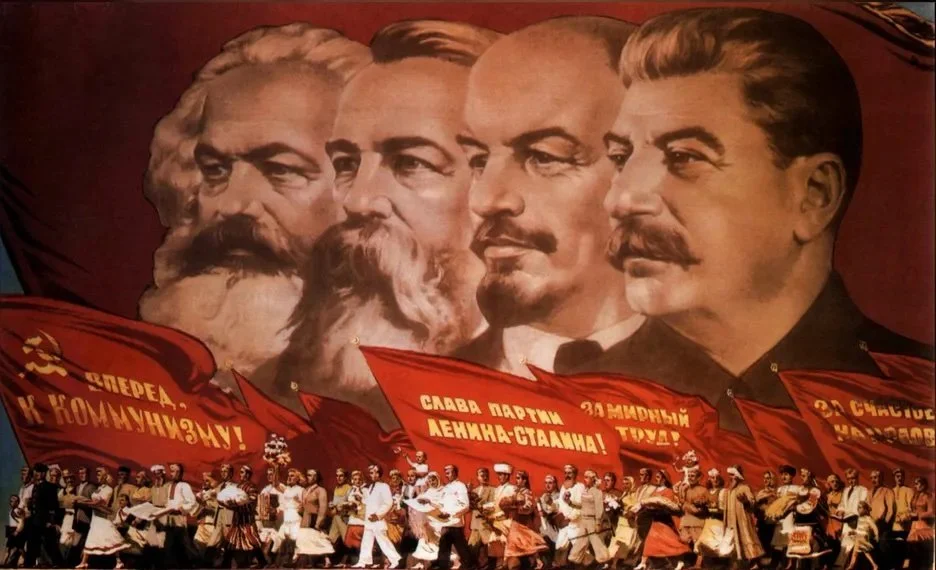
Perhaps the most significant contradiction of capitalism is that, despite its greatest competing ideology, socialism, in the form of Soviet communism, failing spectacularly in 1991 — despite capitalism having ‘won’ — it remains on the back foot (to use a cricketing metaphor) in terms of public perception in the West. However, capitalism is not a unitary phenomenon. What makes one manifestation of capitalism more successful than another? And how, for that matter, do we define success? If liberal market-based capitalism is to survive, current controversies and crises — polycrisis — be recognised, understood, addressed and overcome. However, there is little evidence even that recognition is systematic or comprehensive. How can we move forward?

Provider capture, Stigler and Le Grand
One of the most evident and controversial aspects of democratic socialism was also one the most corrosive aspects of the more virulent forms of socialism, Soviet (or Chinese, or any other form of) communism. That is that there is a group or class of people who capture a disproportionate benefit from the distribution of wealth, goods, services and opportunities within the operation of the planning and production sytems.
Within a system of democratic, state service provision, as in socialised health and education systems or state management of industry, there will be groups who are more proficient at accessing, using and benefitting from state-provided services that others. The LSE economist Julian Le Grand called this ‘middle-class capture.’ However, capture does not occur only within the allocative functions of the state, but also its regulatory functions as famously described by U. of Chicago economist George Stigler. Inevitably, this leads to the possibility of government failure, notionally equivalent to the concept of market failure. If even the state can fail, where does that leave decision-making on the merits of intervention?
An axiom of the public choice school
In 1962, an economic text burst on to the scene that would alter the way economists think about the respective roles of the state and the market. James Buchanan’s and Gordon Tullock’s The Calculus of Consent was, as it has been since then, a book you that, once you have read it, you never forget nor does the power of its message wane.
Its subtitle, Logical Foundations of Constitutional Democracy provided exactly what it said on the tin, pointing out that public decision-making or public choice occurred within the context of two sets of rules: the rules under which the decision was to be taken and the logic and rules governing the establishment of those rules; the latter were defined as constitutional rules. To change constitutional rules should require unanimity or, at least, the protection of a supermajority.
The genius of The Calculus, however, lay elsewhere. It was Buchanan’s and Tullock’s unshifting emphasis on individualism and individual action. Their fundamental point what that, within a collective-action frame, individuals cannot choose an outcome; they merely act as individuals, they vote or express their opinion. While they may have a preferred outcome and probably will, that outcome is not within their gift. Only their individual actions count. Their is no collective action, per se, merely the aggregation of their individual actions in expressing their preference within the decision rules dictated by the (small c) constitution and the result that emerges from that vote. Masterful in 1962; masterful now.
Their work remains one of the most powerful contributions to the reconciliation of political science and economics since John Neville Keynes The Scope and Method of Political Economy in 1891.
Living with the consequences of the industrial revolution
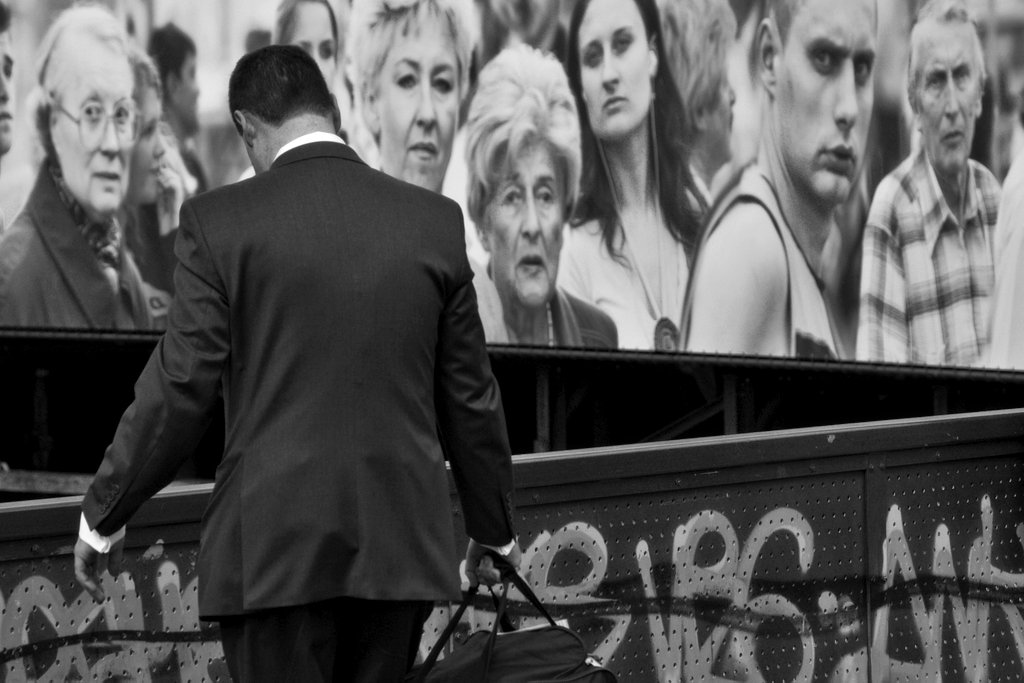
The consequences of the industrial revolution have been to improve enormously the lives to hundreds of millions of people. That improvement, that ‘progress’ has been transformative but it has been neither uniformly-shared nor has it been without, second- and subsequent-order effects.
Most observedly, unpriced externalities from (i) the changes in production technologies and (ii) the failure to establish or enforce meaningful chadow prices on those externalities (and thus seek to internalise’ them within the pricing structure, have resulted in widespread pollution, environmental degradation, despeciation and a change to atmospheric chemistry resulting in an increase in the trapping within the atmosphere of radiant heat; that is, anthropogenic climate change.
Secondly and also catastrophically, it has resulted in increasing incidence of what Durkheim described as anomie, the psychological effect of the breakdown of the historic relations and paradoxically-enabling constraints of social structure that previously produced cohesion and social order. The result is widely-experienced ineffective socialisation and inculcation of ordering norms and habits, leading to normlessness, disorder and alienation.

Responding to anthropogenic climate change
In the New York Times in May 1946, context of the end of the Second World War and the use of atomic weapons, in 1946, Einstein was quoted as saying”
❝ A new type of thinking is essential if mankind is to survive and move toward higher levels. ❞
The same is true 80 years later. The nugatory progress towards containing the emissions of gases that are changing the rate at which the atmosphere traps radiant heat shows that we need to think differently about the problem. While there are agreements in place, notably the Paris agreement of the Conference of Parties to the UN Framework Convention on Climate Change, the list of countries repudiating their commitments under the 2015 Paris Agreement grows ever longer. The target for keeping global temperature rises to within 1.5ºC higher than pre-industrial levels. This level has alread surpassed.
What does thinking differently about the problem mean? How can we encourage nations to shift their collective mental paradigms on the issue when vested interests are so strong? It is difficult presently to imagine, but somehow we must find away.
In 1955, the eminent American psychologist George Kelly released his two-volume masterwork, The Psychology of Personal Constructs. Towards the end of Clinical Diagnosis and Psychotherapy (i.e., vol. 2) he state:
❝ From the standpoint of the psychology of personal constructs we may define a disorder as any personal construction which is used repeatedly in spite of consistent invalidation. ❞
Following Kelly, our current constructs in which, in the face of continued evidence that they do not achieve beneficial results, these repeated efforts at compromise solutions hammered out in global forums will prevent further terrestrial heating suggest we are disordered.
It is time to try something radically different.
Emerging totalitarianism
Are the unlateral actions of Donald Trump, in apparent violation of the US Constitution, the first steps towards a newly-emerging totalitarianism? Are we witnessing the erosion of democracy and the beginnings of a new American autocracy or of 21st century fascism? Are the successive failures of countervailing institutions, including the other two arms of government, Congress, the Supreme Court, as well as the ‘fourth estate’ or information media, undermining the rule of law in the country that was, hitherto, a bastion of democratic continuity in a world littered with illiberal despotism? Is Trump a despot?
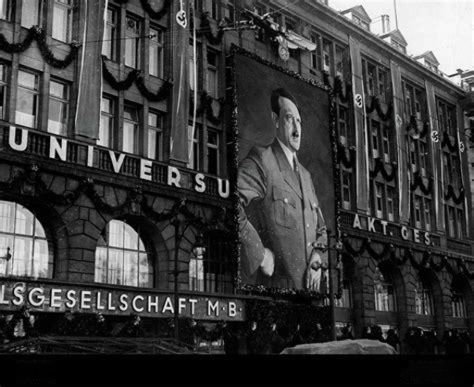
The last century leaves us with regrettable examples of democracies being overtaken legally by regimes that had no respect for the norms of liberal or constitutional government; who simply swept conventions aside as soon as they had consolidated sufficient institutional control.
But the United States of 2026 is not the Weimar Republic of 1932. While the capitulation of Weimar democracy in the face of National Socialism presents us with the extreme scenario, progress along a similar path is by no means assured.
Trump may be unknowledgeable, incurious and ungrounded; he may even be unhinged or in the grip of significant cognitive decline. He is undeniably a malignant narcissist. But he is not Adolf Hitler. He was not gased in the trenches of Flanders or elsewhere; bone spurs saw to that.
But also, that does not mean that we can eliminate the possibility that democracy is under genuine strain and beyond destruction. Perhaps our greatest protection is that Trump personally is simply too erratic to cause sustained damage to the vital institutions that sustain liberal democracy; his concentration span is simply too short and his strategic instincts too weak.
Still, his purported accolytes and his financial backers are more considered and orders of magnitude more dangerous. Trump is merely an electorally useful dupe with a herculean ego and high media profile that affords voter recognition. The scarier thing is what that means about the calibre of US popular electoral judgment.
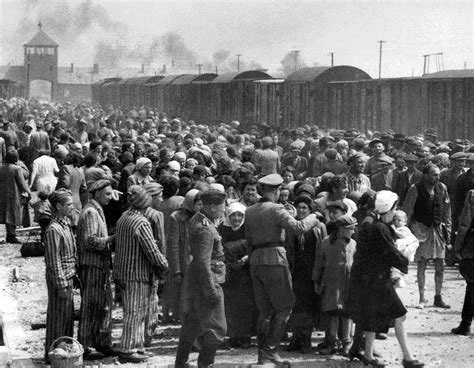
Theodor Adorno’s challenge
In 1955, cultural critic and leading member of the Frankfurt School Theodor Adorno wrote:
❝ The critique of culture is confronted with the last stage in the dialectic of culture and barbarism: to write a poem after Auschwitz is barbaric, and that corrodes also the knowledge which expresses why it has become impossible to write poetry today.❞ (emphasis added)
This well-known line, typically repeated without its surrounding context, is easily and often misinterpreted. Rather than seeking to obliterate poetry or even to focus or constrain it, Adorno merely reminds us both of the potential for darkness in the soul of all humans and that, when life itself becomes so subject to arbitrary obliteration, our collective joy is diminished through innocence lost. His statement underscores the need for constant practical measures of vigilence against that darkness again overcoming light; the poetic may, and even must ,be displaced by that practical vigilence.
Yet time and again since the gates of Auschwitz were opened in April 1945, humans have sunk to similar levels of depravity and inhumanity, be it in the paddies of Cambodia, in Srebrenica, in the savagery of the Rwandan atrocties or in the tribal and religious rivalries of the Sudan. Some would add, without having to descend to irony, in Gaza.
When leaders of powerful countries threaten cilivilisational destruction on weaker adversaries, it is easy to see that our rhetoric has gone too far and our the exercise of our memories and conscience not far enough. We are failing Adorno’s challenge. Bombing people “back to the stone age” was an abhorrent notion usually attributed the lips of Curtis LeMay. Although LeMay never said it (the line origniated with political satirist Art Buchwald), the misattribution by an NYT review of LeMay’s 1965 autobiography stuck.
The line speaks of a lack of simple human compassion, of proportion, and of conscience that is unpardonable. To repeat it in a social media post shows the depravity of the man posting rather than the righteouness of his cause.
The regime of the mullahs has the blood of thousands of its own people on its hands and perpetrates at home daily oppressions unthinkable in the developed West. Abroad, it prosecutes activities through proxy actors that are an abomination in any religion. They must be curbed. But that can only be through actions that are prudent, temperate, just and committed. By allowing our actions or the joint or several actions of the West to sink to their level means they already impose a form of defeat.