
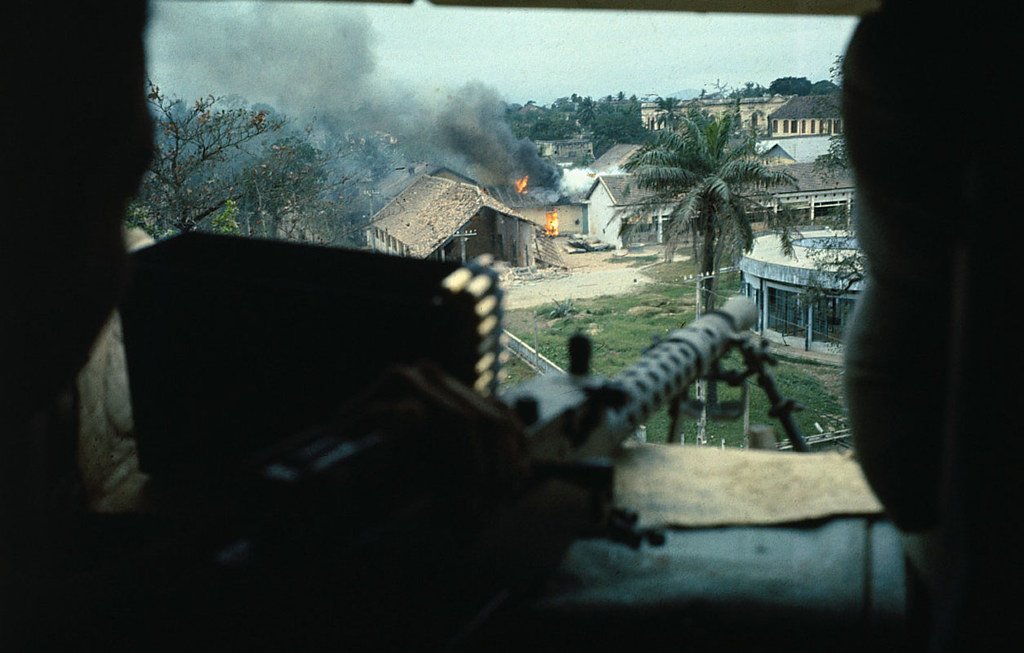
International relations and the international order
States remain the principal actors in world affairs, but the order in which they act is fraying. In 2025 more armed conflicts involving states were recorded than in any year since records began in 1946. We ask why, and what Britain can do about it.
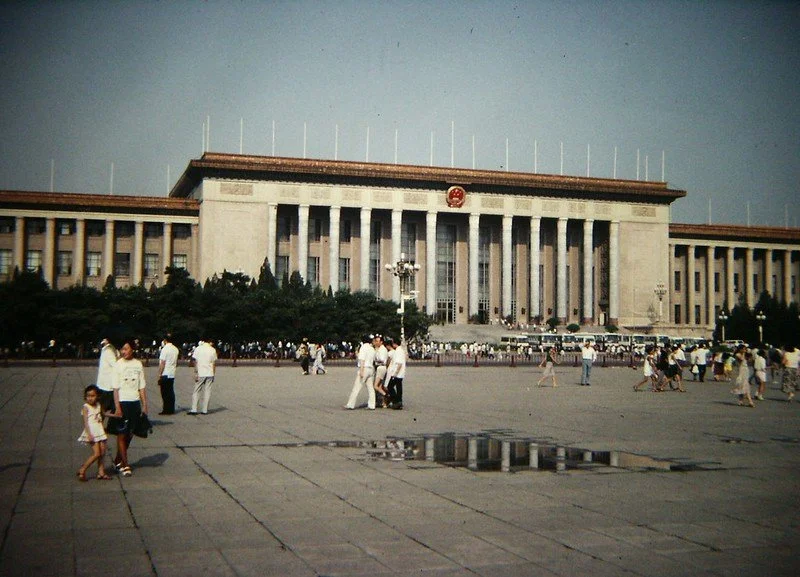
The nation-state
Textbooks date the system of sovereign states to the Peace of Westphalia in 1648. Andreas Osiander has argued that the story is largely a myth, and that the study of international relations judges the present against an imagined past built from nineteenth- and twentieth-century ideas of sovereignty (Osiander 2001). The point matters for policy. The nation-state is a contingent arrangement, not a law of nature, and where the boundaries of state and nation fail to coincide, the state can become a cause of conflict rather than a cure for it.
Yet we hold that no better vessel for democratic consent has been found. Supranational bodies have not won the loyalty that nations command, and secessionist movements can reproduce on a smaller scale the exclusions against which they rebel. We ask what the nation-state does well, where it fails, and how far its powers can be pooled without loss of consent.
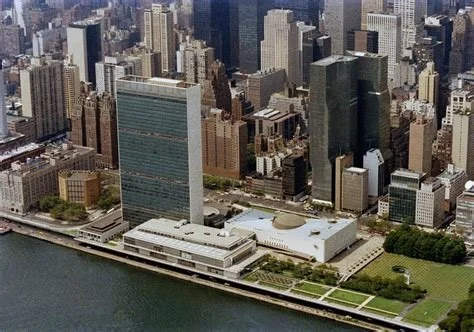
The international system: International law or anarchy everywhere?
One pole, two or many?
For Kenneth Waltz the international system is anarchic in a precise sense: no authority stands above states (Waltz 1979). In 1964 he argued that a world of two great powers was more stable than a world of many. After 1991 the United States stood alone. In 2016 Stephen Brooks and William Wohlforth argued that China would not soon overtake it, because the capacity to act globally, rather than in one’s own region, sets a far higher bar than economic size (Brooks and Wohlforth 2016).
Ten years on, three readings compete: a fading unipolar order; a new bipolarity, with China in the place once held by the Soviet Union; and a looser multipolarity. Law has not vanished. In March 2022, 141 members of the UN General Assembly deplored Russia’s aggression against Ukraine, and only five voted against. But law binds only so far as states will enforce it. For Britain the choice of reading matters, because each implies different allies and a different level of defence spending.
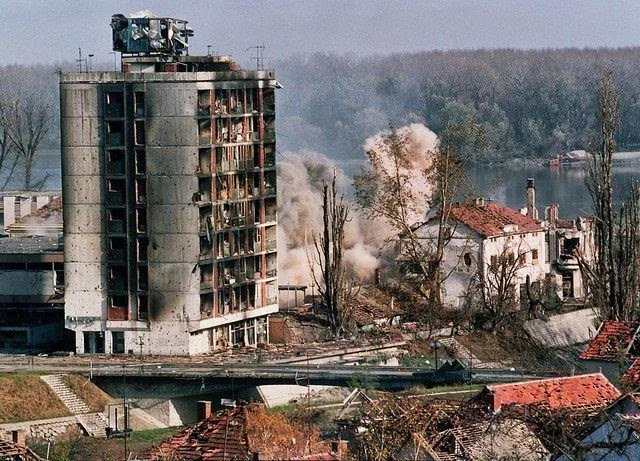
Why are there increasing conflicts within the international system?
Sudan and the eastern Congo
The rise is measurable. The Uppsala Conflict Data Program counted 61 armed conflicts involving states in 2024 and 65 in 2025, each a record since 1946; Africa accounted for 28 of the 2024 total. Two wars show the pattern. In Sudan the army and the paramilitary Rapid Support Forces have fought since April 2023, two arms of the same state; by April 2026 about 14 million people had been displaced.
In the eastern Congo the M23, which the United Nations and Western governments accuse Rwanda of backing, took Goma and Bukavu in early 2025. A US-brokered accord between Congo and Rwanda and a framework agreed in Doha between Kinshasa and the M23 followed, yet the fighting has continued. Both wars feed on weak states, mineral wealth and outside sponsors. Neither fits a story of civilisations in collision.

Is there a clash of civilisations?
Huntington reviewed
In 1993 Samuel Huntington predicted that “the fault lines between civilizations will be the battle lines of the future” (Huntington 1993; expanded 1996). The thesis took culture seriously at a moment when many assumed that economics alone would shape the world after the Cold War. It has fared less well against evidence. Bruce Russett, John Oneal and Michaelene Cox found that, between 1950 and 1992, pairs of states divided by civilisational lines were no more likely to enter militarised disputes than other pairs, and that power, alliances, democracy and trade explained conflict far better; civilisations helped only to predict alliances (Russett, Oneal and Cox 2000).
Huntington replied that their period lay mostly within the Cold War, which his thesis did not address. The record since then is the fairer test, and it does not favour him: Sudan’s war, among the largest of the decade, is fought between two arms of one state. Culture shapes alignments; it rarely decides who fights whom.
Israel and Palestine
One state or two?
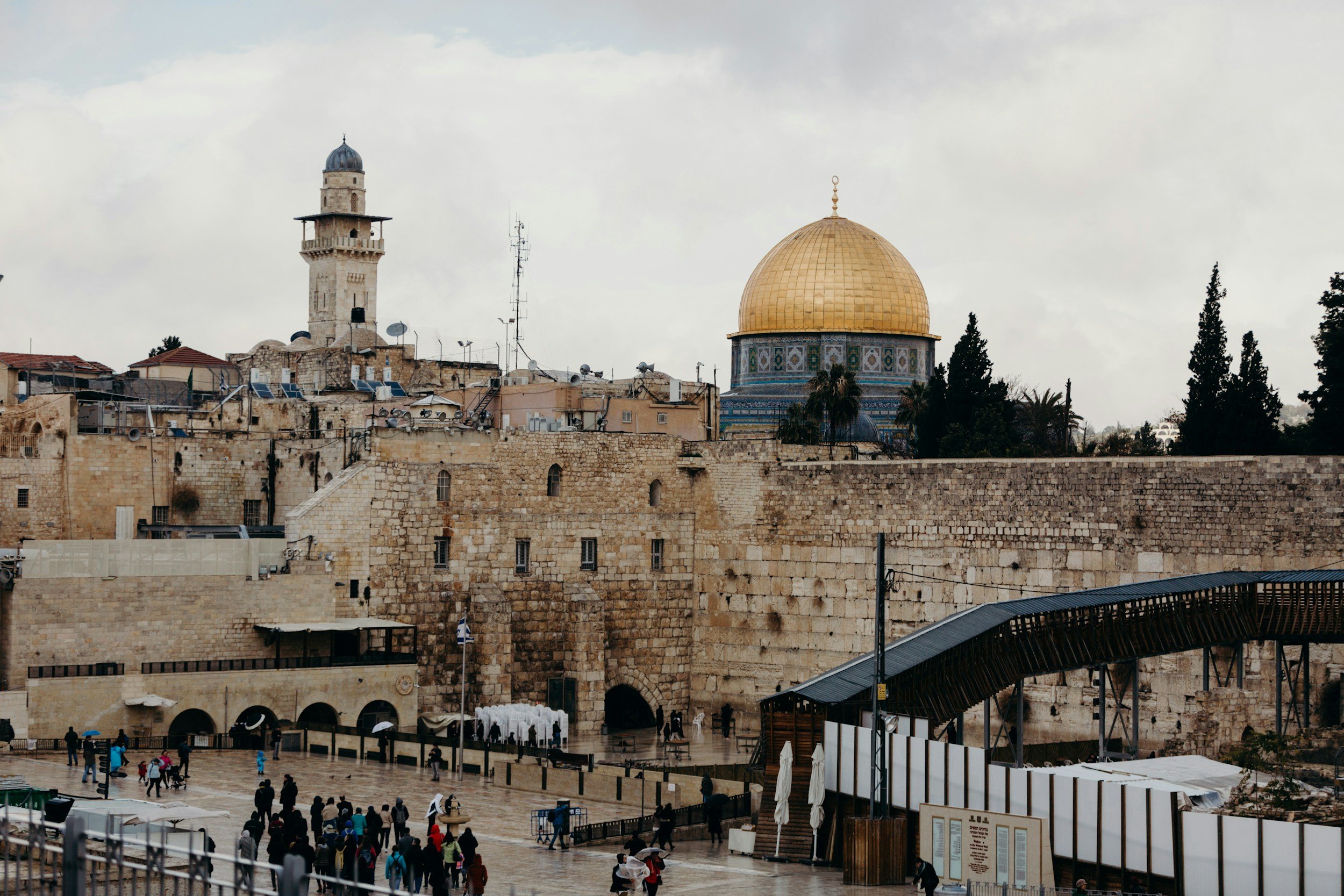
The ceasefire in Gaza of 10 October 2025 ended the main fighting of the war that followed Hamas’s attack on Israel of 7 October 2023; it has not ended the killing. On 17 November 2025 the UN Security Council endorsed the American plan for Gaza, welcomed a Board of Peace as a transitional administration, and authorised a temporary international stabilisation force. Britain formally recognised the State of Palestine on 21 September 2025, in support of a two-state solution.
Two states remain the declared aim of British policy. The obstacles are plain: settlement in the West Bank, which the United Nations reported in 2025 at its highest level since at least 2017; the absence of a Palestinian authority able to govern both territories; and Israeli opposition, voiced by its prime minister in September 2025, to any Palestinian state. The alternatives are worse. A single state with equal rights would end Israel as a Jewish state; a single state without them would end it as a democracy. We ask which steps could keep two states possible, and who would have to take them.

The rise of American Christian nationalist populism: how much is too much?
PRRI, an American research institute, measures Christian nationalism by agreement with five statements about the relationship between Christianity, American identity and the government of the United States. In its 2025 American Values Atlas, drawn from more than 22,000 interviews, about 11% of Americans qualified as adherents and 21% as sympathisers, while about two-thirds were sceptics or rejecters; among Republicans, 56% were adherents or sympathisers. The shares have been broadly stable since 2022. PRRI also found adherents more likely than other Americans to agree that political violence may be needed to save the country.
How much is too much? For a British observer the question concerns less private faith than two public consequences: pressure on the constitutional bar against an established church, and the effect on American commitments abroad. The measure is one institute’s construct, and a belief held by about a third of a population is a political fact to be understood, not merely deplored.
Learning from Versailles about the true price of peace
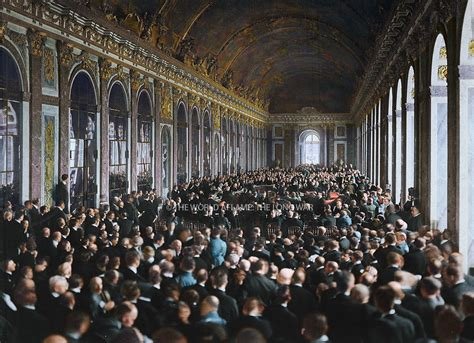
John Maynard Keynes resigned from the British Treasury delegation at Paris and in 1919 published The Economic Consequences of the Peace, condemning the treaty as a “Carthaginian peace” that would ruin Germany and with it Europe. His verdict became the received wisdom: Versailles was too harsh and caused the next war. Margaret MacMillan has argued that the received wisdom is wrong, in part because the treaty was never fully enforced, and that it was not primarily responsible for the Second World War (MacMillan 2001).
The lesson we draw is not that harshness is safe, but that the price of peace lies in enforcement as much as in terms. A settlement that the victors will not uphold, and that the defeated regard as provisional, buys only an interval. That lesson bears directly on any settlement in Ukraine.
Is there a such a thing as a ‘just war’?
The tradition of the just war asks two questions: when it is right to go to war, and how war may rightly be fought. Michael Walzer restated the tradition in secular terms in Just and Unjust Wars (1977). He held that resistance to aggression is just, and that, while a war may be unjust on both sides, it cannot be just on both.
The second question is harder in practice than the first. A war may be just in its cause and unjust in its conduct, and the conflicts on this page test the distinction daily: in the treatment of civilians, in the use of siege and hunger, and in strikes on power grids. We argue that the distinction must be held, because a cause that excuses any means is no longer a just cause, and because the conduct of a war shapes the peace that follows it.