

Our declaration of purpose
Promote liberty, enlightened Western liberal democracy and open & competitive markets
Enhance public policy-making & delivery of programmes and services by the state
Renew political economy and improve its empirical content and policy focus
Assist public & private decision-makers to anticipate more reliably the future and parameters of prospective uncertainty
Western liberal democracy faces multiple imminent threats both from within and without.

Russia
Freedom House score 9 /100
While Russia has every reason to feel aggrieved by Western treatment following the collapse of the Soviet Union in December 1991, it has become an expansionist neo-totalitarian kleptocracy and positioned itself in direct opposition to the West. It has extensive conventional and nuclear military arsenals and its stability is precarious and unpredictable.
The opportunity for rapprochement in 1991 was squandered principally by US investment banks seeking short-term profits on collateralised debt.
Extensive energy reserves cushion its porous isolation from the West and sustain its war of aggression in Ukraine.
Ostensibly to protect its strategic naval base and assets in Sevastapol, Russia annexed the Crimean peninsula in 2014. Emboldened by the lack of coherent response from the West, Russia invaded the neighbouring Donesk and Luhansk oblasts in 2002, nominally to protect is majority Russian-speaking populations. However, the vast hydrocarbon and other mineral resources of the Donesk Basin and provided a further buffer from European growth are more credible reasons.
Despite the unpopularity of the conflict, Russia faces few options for de-escalation in its war against Ukraine that will be credible domestically. Protracted stalemate or increasing Ukrainian resistance backed by European funding appear the most likely medium-term prospects.

Saudi Arabia
Freedom House score 9 /100


Italy

China
Freedom House score 10 /100

Qatar & UAE
Qatar FH score 25 /100
UAE FH score 18 /100
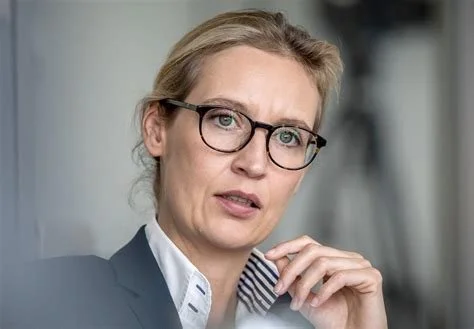
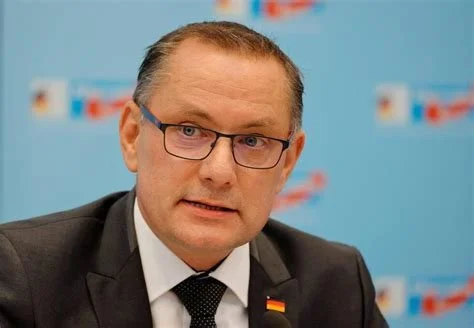
Alternatif für Deutschland
Alice Weidel, Tino Chrupalla
co-leaders AfD

Austria
FPO
Herbert Kickl
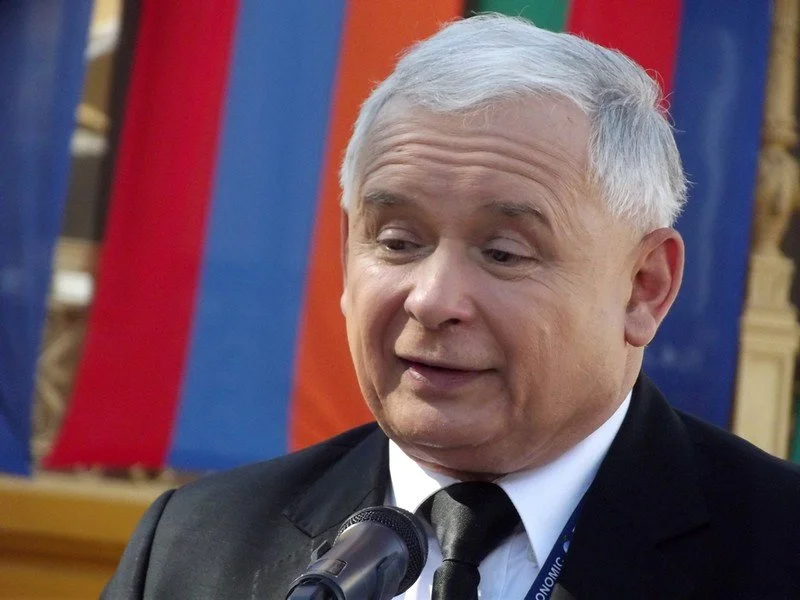
Poland
PiS
Jarosław Kaczyński
These conditions, including, particularly, reaction to successive waves of extra-European and intra-European migration, have provided substantial electoral opportunities for reactionist demogogues to form or take over populist, nativist political paties which have attracted increasing electoral support.

Iran
Freedom House score 10 /100

Turkey
Freedom House score 32 /100
And from within . . .

Decline in legitimacy of free trade, globalisation and the Western, liberal democratic order
Endogenous pressures from mounting economic contradictions, growing inequality and discontentment among voters and faltering economic performance in the major economies of the West, contrasting what are perceived to better-performing autocratically controlled managed economies, especially China. And the cumulative effect of economic, migrationary and emerging environmental crises — seemingly perpetual ‘polycrisis’
The return to European politics of populist and nativist parties and populist, demagogic leaders
Fratelli d’Italia
Giorgia Meloni, PM
Germany

France
Rassemblement National
Marine Le Pen, Jordan Bardella


Netherlands
VVP
Geert Wilders
Hungary
Fidesz
Victor Orban PM

UK
Reform
Nigel Farage
But what does that all mean?
Promote liberty, enlightened Western liberal democracy and open & competitive markets
Enhance public policy-making & effectiveness & efficiency of delivery of programmes and services by the state
To assist public and private policy makers to anticipate more reliably the future by incorporating analysis of scientific & technological developments, patterns and constraints of social & institutional change and of uncertainty and the causes of uncertainty in to forecasting & prognostication.
To propose & promote public policies which will realise those aims of liberty, (positive and negative) freedom, efficient operation of free and open markets, economically efficient regulation by government and effective & efficient provision of defence, security, justice, public order and those services delivered by the state;
Renew political economy and improve its empirical content and policy focus
Assist public & private decision-makers to anticipate more reliably the future and parameters of prospective uncertainty
To promote a realist & renewed political economy that will serve better to inform public policy-making than current, idealised, mathematically-tractable models of economic behaviour.
To assist public and private policy makers to anticipate more reliably the future by incorporating analysis of scientific & technological developments, patterns and constraints of social & institutional change and of uncertainty and the causes of uncertainty in to forecasting & prognostication.