

Urbanisation and planning
What is the role of government?
And which government?
Cities
Urban
Planning
Urban planning
Regions
Regional planning
Urban v rural
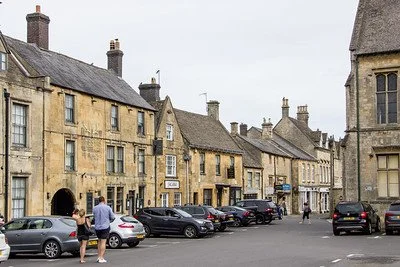
Living regionally
The disparities between London and the other urdan centres in the UK are vast and unproductive. Whereas London is an international city, many other UK urban areas are regionally-focussed at best. That used to be sufficient. It is no longer. It is vital that other cities and other urban centres be connected directly with the rest of the world physically, intellectually, commercially and emotionally. This is not a matter merely of levelling up. In so many areas of life, Britian can offer an example and leadership in a fractured world. That leadership need no come solely from one place but also from the seats of knowledge, experience and capability that are distribted throught this country.
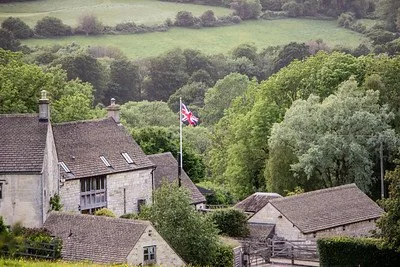
The urban / rural divide in the UK
In many facet of life, there remains a divide between rural Britain and urban Britain. The issues of wealth, class & economic performance resonate differently in more rural areas. Not only do they mean different things but, for those on the wrong side of each of those divides, the divides are deeper and more enduring than they are in the country’s cities and large towns.
An interesting example of this divide is the fox-hunting ban enacted by the Blair Government in 2004. More that most other issues, it bruised relations between rural dweller and urban dwellers by persuading each group that the other was either slavishly ties to brutal traditions or devoid of understanding of the relaties of life. Inconsistent agricultural and rerual development policies have also deepened the divide which is beneficial to nobody.

If we need more homes, where should they be built?
Few issues have the capacity more to enrage and divide opinion than does the pressure to build more homes in England and where they should be built. Similarly, the behaviour of land and property developers, while legal, appears to contribute to the problem rather than relieving it, particularly the phenomenon of ‘land-banking.’
Constraints and processes for planning worsen the confusion and the opacity of the problem as well as casting doubt on the neutrality of local government decision-making, eroding confidence in local institutions of democracy.
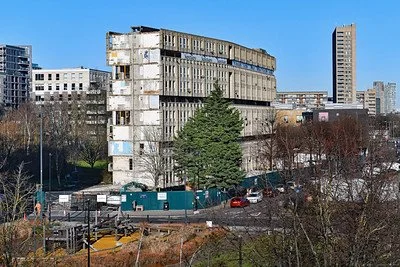
The realities of the ‘housing crisis’
There isn’t a housing crisis; there is a planning crisis. In crude terms, the UK has in excess 300,000 long-term empty homes. Unfotunately, many of them are not where people now wish to live or of a sufficient standard in which to expect people to live and to thrive.
For far too long, rental housing as been treated as a way to make money with little or no acknowledgement that they may be someone’s home. Additionally, the shortfall in housing relative to need allows landlords to rent housing that is barely habitable. The people most impacted are among the poorest and most vulnerable.
There is plenty of blame to share around and few practicable solutions on offer.
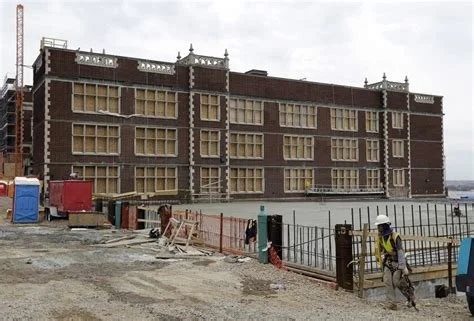
A radical solution to the housing problem
A material part of the problems in the housing market is that housing is not allowed to operate as a market in the usual sense. There are rigidities in land use — especially green belts — and complex and variable planning process that are hihgly location-dependent.
However, before moving to a market with less interference, we need to close the tax loopholes around housing and make capital gains subject to a tax regime consistent with other forms of wealth generation in the economy — no small task.
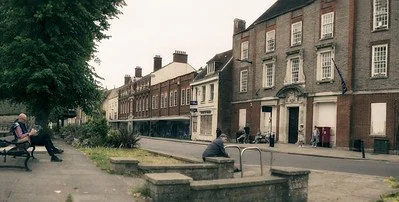
Reviving town centres
Is it inevitable that retail chains will dominate high streets, increasing their homogeneity across the country? What does a level playing field look like? Do towns want local commerce or are chains what people really want?
How we approach reviving our towns has a material impact on the quality of life people who live in them can enjoy. Access to services as well as to goods are crucial elements of living a vibrant and engaged life, as is opportunity to consume art, music and cultural events.
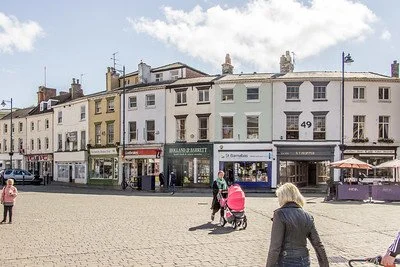
Rethinking what makes a city liveable
Why do people increasingly congregate in cities? And what does that increasing crowding in to shared spaces do for our states of mind?
For many years, the notion of increasing housing availability as a priority has led to steady reduction in land and facilities available for different public uses. Sports fields have disappeared; open spaces have increasingly become enclosed and opportunities for shared social development have diminished. In the midst of ever-greater crowding, people report increased feelings of loneliness. Do we need to rethink what cities are, what they do and why people are drawn to them?

Bringing nature back in to cities
As cities have become ever-more removed from nature, we have suffered. Humans need nature and to experience nature; the more regularly the better. Bringing nature back in to our jungles of barren concrete so that people can reconnect with nature, appreciate it more fully and more regularly seems increasingly important for both mental and physical health. But doing so is a challenge and maintaining natural public spaces that are safe and free from anti-social behaviour is a multi-faceted challenge.

Encroaching on nature
‘The ‘green belts’ encircling 15 of our major towns and cities occupy 12.6% of Britain’s available land. Are they an unalloyed benefit or do they inhibit further urban development and throttle the possbility of housing development? Often public debate appears to treat green belts with almost religious reverence. But they are a choice and often are not used for the public weal. What needs to change and why?
In addressing these issues, we must be aware that abandoning green belts and allowing increasing encroachment is irreversible. The question must be addressed holistically; shortages of housing can be resolved in other ways.
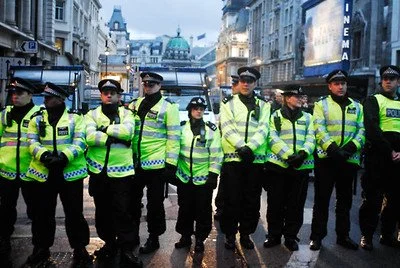
Policing & safety in urban areas
Bringing together people from different backgrounds and wald of life and putting them in a confined space creates social and psychological pressure that it no always released healthily. While crime has been falling secularly for a couple of decades, there are still too many instances where people — especially women and girls — feel unsafe. And certain types of crime, especially in poorer and less wel-served areas target young people. What is the optimal approach to policing in our urban areas>

Being local and global
Information and communication technologies have altered our world in ways we do not understand or, often, even notice. While we each still live locally, we alse simultaneously face the option to live in an accessible global world. We ar enow all citizens not only of our local environments, but potential of any or all environments. What does that mean for how we live and work? Being both local and global can offer the best of both, but it can just as easily offer the worst of both? How do we manage this dichotomy in ways that are healthy for us and for those who are growing up without knowing anything other than the ubiquitous presence of a parallel, online world?

‘Massification’ versus specialisation
Being both local and global changes not only with whom we can communicate and about whom we can learn. It also changes how we can work and earn.
Historically, town and regions attempted to attract large industries to invest in their locales and employ their residents. Industry relied on scale, the more massive the better. But in a world where you can reach in to any home in the connected world, ‘massification’ is no longer necessary for scale; building sale means something different. Yet our thinking on opportunity is often anchored in the industrial world of the past.
The generation of prosperity in the future depends less on our stars than on ourselves; less being an underling and more an being an entrepreneur; on identifying specialised opportunities in an increasingly international market place and satisfying them with diligence and discipline. But that requires the skills, resources and inclination to do so.