
Artificial intelligence
The bigger picture; the smaller wave
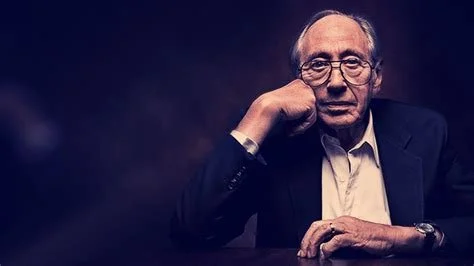
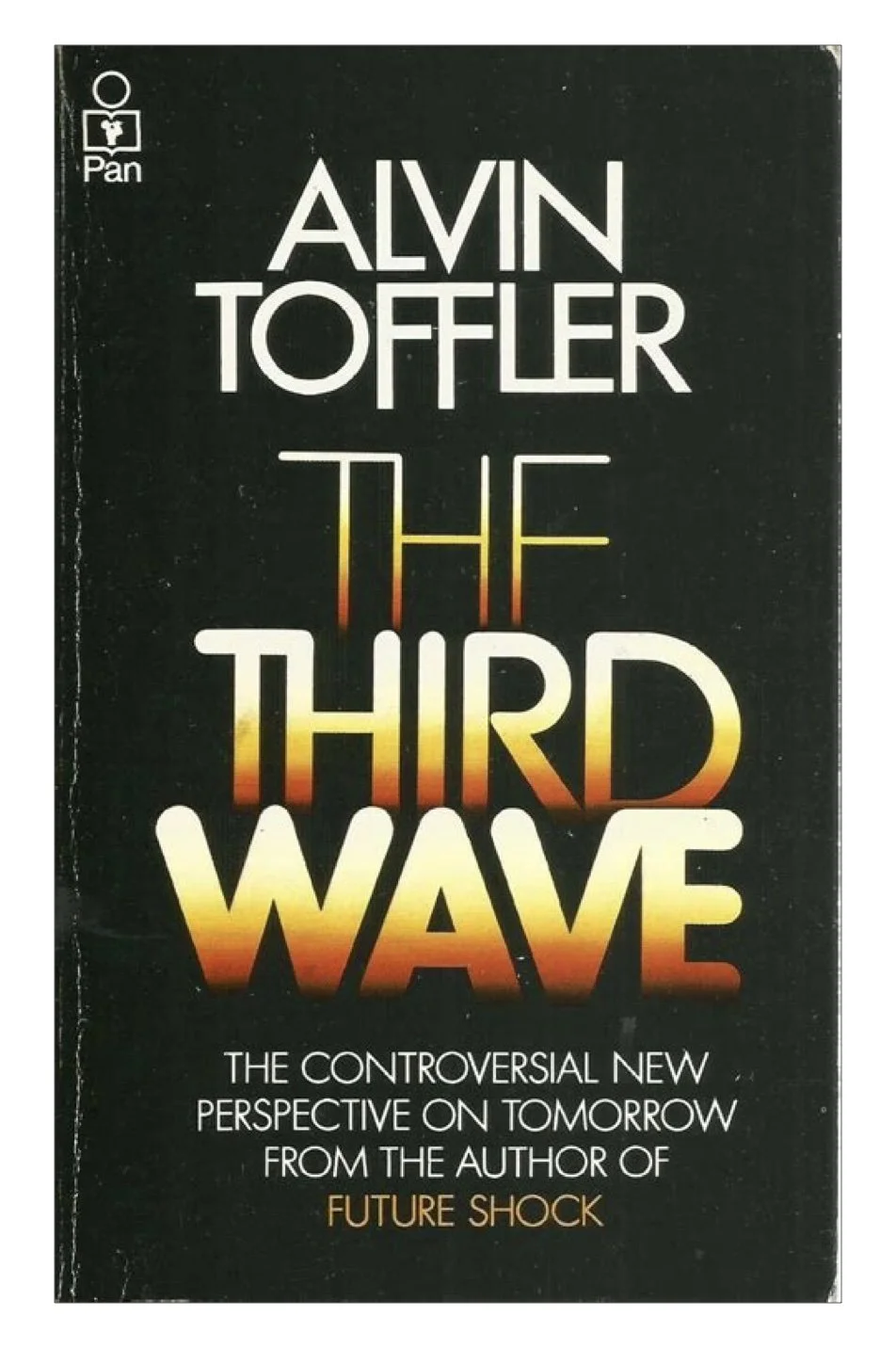
In 1980, US publishing House William Murrow published Alvin Toffler’s The Third Way, a follow-up to his book of a decade earlier Future Shock. In it, Toffler popularised of waves of technological change, but he was not the first writer to do so.
Joseph A. Schumpeter had done so earlier, though his work focused on the waves of change that had occurred since the second agricultural revolution that hit Britain around the turn of the eighteenth century.
It was the great Vienna-born, German-educated American management theorist and consultant Peter Drucker who first developed the concept of waves of technological revolutions describing , in his December 1995 presidential address to the Society for the History of Technology in San Francisco, and published the following year in the journal Technology & Culture, what we now term the Neolithic revolution or first agricultural revolution in those terms.
Toffler’s work almost undoubtedly rested on Drucker’s imaginative positioning. His book references Drucker, but not in relations to that article. However, Toffler looked to the future impact of digitisation and examined it with remarkable prescience. The story he told of the impact on social institutions and social organisation is still unfolding.
So where are we now with artificial intelligence?
Since Toffler’s The Third Wave, many have described fourth and fifth and sixth waves. However, the imitators offer a meagre understanding of the ultimate point Toffler and Drucker before him, were making. The world is, or has been, at any rate, awash with techno-zealots — those who have faith that technological enhancements will solve our human and social problems. For example, the following an article by its founder and chairman, Klaus Schwab, in 2019, the World Economic Forum has promoted the idea of “Globalisation 4.0.“ In the article, Schwab outlines the enumeration:
“ We are, put simply, living in the era of the Fourth Industrial Revolution, the most recent wave of groundbreaking innovation. The first brought steam trains, steamships, and the industrialization of weaving and mining. The second electrified—literally—much of the world, introduced the modern assembly line, and brought us the car and the airplane. The third, from the 1970s onward, was centered around the computer and early digitization.
“Like its predecessors, the Fourth Industrial Revolution is best described by its leading technologies: artificial intelligence, autonomous vehicles, and the Internet of Things. These are technologies that will affect many industries in the decades to come and accord unprecedented importance to the digital world. What unites them is that they transform the very structures of economic interaction: the twin trends of digitization and virtualization are creating an economy of near-unlimited mobility in which cyberspace is home to all data. As online platforms pursue vertical integration, they cut out traditional intermediaries. And artificial intelligence is creating ‘smart’ systems that are not just analytical but also predictive and prescriptive.” (emphases added)
The enumeration of phases of the industrial revolution borrows heavily from Schumpeter, though skipping over the early phases Schumpeter outlined. However, Schwab’s enumeration is neither as profound nor as insightful as Toffler’s. The point of Toffler’s (1980) analysis is the changing tehnological waves fundamentally first created, then reorganised societies — the technological changes were so profound as to alter and dictate every aspect of our political, social and economic lives and the fundamental nature of the institutions through which those lives were lived, from the development of the written word to family to government to institutions for education to the development of law and everything in between. Schwab’s (and others’) phases imply no such radical change. However singificant, they represent increments.
Schwab is also guilty of pervasive personification. He says “artificial intelligence is creating ‘smart’ systems that are not just analytical but also predictive and prescriptive.” What he means is that people are using the algorithms of narrow AI to create systems (based on large language models and ‘deep learning’) that appear smart; they are not only analytical but use the past as a model for predication; based on these predictions they can posit control rules, in the same way that people might do so prescriptively.
In the latter interpretation, the fundamental difference is that people retain agency rather than abrogating it to ‘systems.’ The different is very definitely not merely semantic.
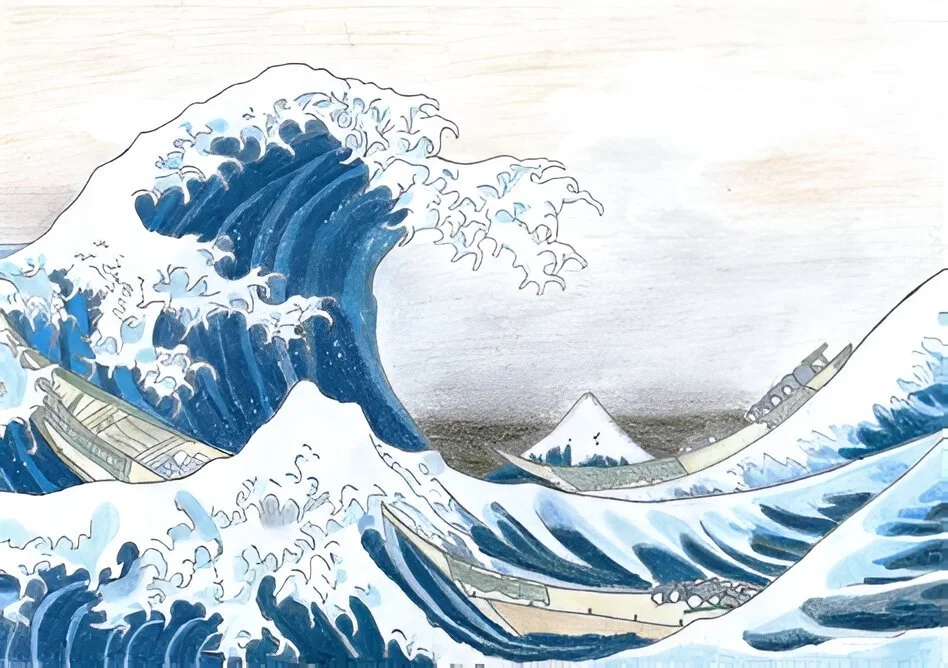
The fundamental difference is between the analysis of Drucker and Toffler and that of Schwab is one of scale. In Toffler’s terms, Scwab’s revolutions can be throught of as waves 3.3 to 3.6 inclusive. Schwab’s waves break on the metaphorial shore, just life Toffler’s. But whereas Schwab’s may be sizeable crashing waves, Toffler’s are more of tsunami, overwhelmining the shore-line and flooding inland to sweep aside the near-shore institutions and practices of the former period.
More importantly, in his 2019 article, Schwab states:
“The potential of the Fourth Industrial Revolution dwarfs even the progress made during the three previous industrial revolutions combined. There is no reason today’s leaders could not proactively manage negative externalities and ensure that inclusive policies distribute opportunities fairly. Digital resources are limitless, and so too can be the wealth they create.
Yet achieving this outcome requires more than patchwork actions that seek to reinvigorate outdated systems. We need fresh thinking about what free and fair economic relations in today’s world means. e global system that states built after World War II was designed around the globalization of planes, cars, global manufacturing value chains, and early computers. But that global system has run its course, and no international organization in existence can cope with the challenges of Globalization 4.0. ere is very little discussion of, let alone consensus on, how to regulate technologies or deal with the Fourth Industrial Revolution’s winners and losers.”
This is where the distinction between the waves of Toffler’s analysis and the revolutions of Schwab’s description begins profoundly to matter. The changes between the industrial age and the information age of Toffler’s third wave are pronounced and profound; those between Schwab’s Revolution 3.0 and 4.0 are considerably less so. Indeed many of the social changes that Toffler predicted as we move to the second (industrial) to the third (information) stages of technology are yet to be realised. In education, as an example, we are still tied in to the habits and routines developed to adjust to the technologies of the industrial revolution; wholesale adaptation has barely begun, least of all progressed so that another new phase is emerging.
Indeed, many of the social ‘crises’ with which we are dealing are mis-characterised in just this manner. In The Third Wave, Toffler defines these crisis as symptons of a “super-struggle’ for tomorrow.” His words are as a propos today as when he wrote them in the late 1970s:
“The conflict between Second and Third Wave groupings In, in fact, the central political tension cutting through our society today. Despite what today's parties and candidates may preach, the infighting among them amounts to little more than a dispute over who will squeeze the most advantage from what remains of the declining industrial system. Put differently, they are engaged in a squabble for the proverbial deck chairs on a sinking Titanic.
“The more basic political question, as we shall see, is not who controls the last days of industrial society but who shapes the new civilization rapidly rising to replace it. While short-range political skirmishes exhaust our energy and attention, a far more profound battle is already taking place beneath the surface. On one side are the partisans of the industrial past; on the other, growing millions who recognize that the most urgent problems of the world—food, energy, arms control, population, poverty, resources, ecology, climate, the problems of the aged, the breakdown of urban community, the need for productive, rewarding work—can no longer be resolved within the framework of the industrial order.
“This conflict is the "super-struggle" for tomorrow.
“This confrontation between the vested interests of the Second Wave and the people of the Third Wave already runs like an electric current through the political life of every nation. Even in the non-industrial countries of the world, all the old battle lines have been forcibly redrawn by the arrival of the Third Wave. The old war of agricultural, often feudal, interests against industrializing elites, either capitalist or socialist, takes on a new dimension hi light of the coming obsolescence of industrialism.”
This distinction remains as true today as it was 45 years ago as Toffler wrote those words. To focus on the smaller, but nonetheless significant change wrought by the individual digital technologies as they merge is to lose the bigger picture of the pressures building fundamentally to realign our social institutions as we move from the industrial age to the information age. By itself, narrow artificial intelligence based on large language models is significant, especially when deployed with other narrow AI developments in visual and aural functionality, adaptive, machine-learning algorithms and developments in robotics. But the digital revolution still has a long way to travel both technologically and, especially, socially as our institutions struggle to adapt to the pace and direction of challenge. Forces of reaction from those seeking to shore up and control the latter days of the industrial society will not retreat without a fight. It is that fight for control, against the background of the over-arching ‘super-struggle,’ that is now causing us such angst and such conflict. It will not pass quickly. And it will feel even longer.