

Infrastructure
How did it get so bad?
What should be investment priorities?
And will there ever be a light at the end of the tunnel?
The state of the state’s estate
In the 2020s, the UK is still living with the legacy of the 1940s. UK infrastructure has, largely, been in government hand throughout that period. Only in telecommunications, water and waste water and railways operations has infrastructure and/or its use been in private hands, at least since the 1980s. These represent the very best, the very worst and the least well coordinated of outcomes respectively.
Telecommunications has clearly been a succes story, principally because technologies have shifted in favour of increased competition in supply, although, until relatively recently, investment in rural infarstructure and ‘the final mile’ remained subject to increasing returns to scale.
Water has been a disaster of the highest order and is a festering embarrassment of commercial, political and, especially, regulatory failure.
Rail infrastructure is beset by problems but lags well behind comparable European countries. It need not be so.
The key problems, telecommunications excluded, are decades of deferred maintenance and under-investment and grossly incompetent regulation, a familiar UK economic disease. The government’s deferred maintenance bill in health alone is in excess of £14 billion. And we wonder why we have problems.

Getting to the church on time: problems on UK railways
The problems with UK railways are signficant and will not be solved rapidly as the on-again/off-again/maybe-on-again HS2 debacle demonstrates.
The root causes of the problems are easy to identify and immensely difficult to solve. With infrastructure, appears problem is planning-related. In part it is. But in part it also represents a commendable commitment to applying the same rules to government that apply to private development. While laudable at one level, this results in grossly-inflated costs of infrastructure development. Really, it is a failure of goverment vision.
The next problem is, yet again, deferred maintenance and a lack of routine programmes of active and passive security investment. And the price of copper.
Another problem is that infrastructural work is delayed by, well, pretty much anything; weekends, especially.
In rail, another problem is attempting to combine coordination with competition. It can be made to work. It just doesn’t.
But the over-riding problem is a lack of ambition. Britain developed and deployed the world’s first maglev train. It was also the country’s last. That say all that needs to be said.

The hospital problem
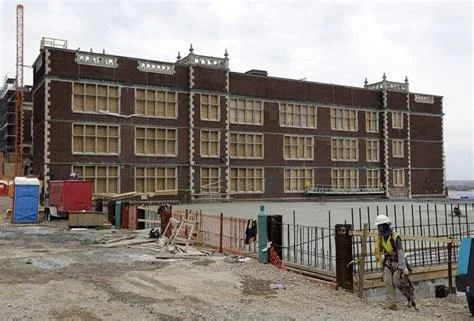
There are two ways of looking at the problem of health: realistically and the way the UK media, public and politicians look at it. ‘Out NHS is a beloved institution. Except that it isn’t. It is roughly 175 institutions that consume around 9% of GDP with a deferred maintenance bill presently standing at £14 billion, without even beginning to consider those sites that are inefficient and unfit for the purpose they fail properly to serve. The appalling state of the UK hospital estate is one, but only one, reason why healthcare is achieved relatively cost-effectively in the UK. The facilities are old, decaying, sometimes even dangerous, and are routinely no conducive to delivering a complex and high-cost service efficiently.
Very few of the country’s crumbling hospitals are architectural treasures; more often they are shoddy structures from the 1920s and 1930s that were of questionable utility when built. But it is since the 1950s that everything has gone horribly wrong.
In commercial healthcare, facilities are maintained, enhanced and replaced largely as required with the cost met by the user. Britain’s NHS is run centrally and run-doen centrally so that care can be delivered within resource constraints. Repair, maintenance and development fund that should be applied to infrastructure have routinely been diverted in to operational costs.
The NHS is not a commercial entity or even 175 commercial entities. But it should be run commercially and professionally. It is not. It is run by enthusiastic amateurs who deride commercialism. Until that changes, we are stuck with what we’ve got: broken buildings.
The transport dilemma
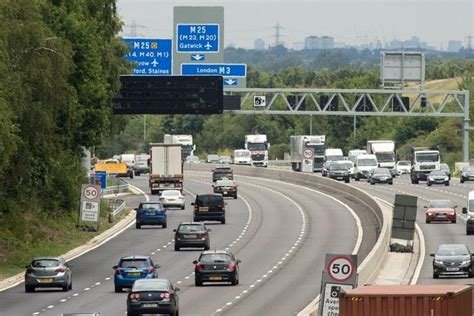
One thing that strikes visitors to Britain is the state of its major roads. They are surprisingly good. They are also heavily congested with lorries carrying freight that could and probably should be carried by rail. However, poor coordination of stock movement on the country’s rail network meand that carrying frieght by road is cheaper. It is also dirtier and more damaging to the road stock. Of course, 98% of the UK’s roading network is made up of local roads.
UK taxes on petrol and diesel raise approximately £24 billion annually. The budget for highway and local road maintenance and improvement is around £24 billion over the period 2026 to 2030.
As a 2024 report of the UK’s National Audit Office highlights, as in so many other areas of government expenditure, funding of the road network is labyrinthine, full of invisible cross-subsidies with localised decision-making resulting in significantly varying allocations of expenditure and considerably variability in road quality between local authority areas.
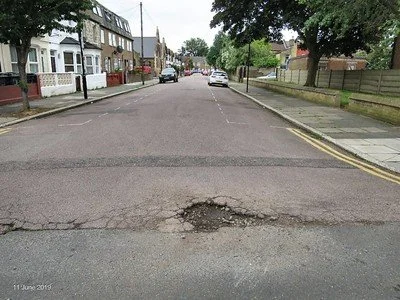
As it other areas of infrastructure, road maintenance requirements have come second to other demands on operating expenditure, resulting in a decline in the quality of the road network. The most reliable source of estimates suggests deferred roading maintenance across England at £15.6 billion.
Until there is a clear and transparent relationship across government between sources of revenue and application of expenditure, this horror show of budgetary smoke and mirrors will continue unabated.

Not our problem: the funding of local government
Text

Information & telecommunications infrastructure
Text
Filling the (pot-) holes
Text

Q: Why has UK water privatisation been such a abysmal failure?
A: complete failure of regulatory comprehension, regulation and enforcement.
Quite simply, regulation of the water industry has been ill-conveived, economically illiterate, wholly captured by the industry and completely ineffective.
Private sector investment in water can be very attractive. The reason is simple: reticulation and, often, sourcing represent natural monopolies. Market failure is not the exception; it is essential to the nature of the service and the vital good it delivers.
So how did government get it so wrong? Because UK goverments at political level and at technocratic and bureaucratic level do not understand the nature or purpose of commerce. The problem is endemic across government in the UK, just as it is very common everywhere. Few UK civil servants work in government; fewer are economically literate and fewer still can claim a deep or often even a shallow understanding of the fundamental principles of corporate finance. Yet the people on the other side of the negotiating table understand corporate finance and, contract structuring, risk holding and incentives very well. That is their day job.
The paradox of value in economics shows as its example case taht, under certain demand and supply conditions, water is more valued than diamonds. Literally. It’s stage one microeconomics.
It is not too much of a stretch to think that HM Treasury officials should know that and explain it to their political overlords. And ideally, there should be at least a shaft of light between regulators and the industry they regulate. And that in a vital resource supplied in a network in an economy with a risk-free rate of 3.5%, an ROASHF of 14.3% should lead to someone asking questions.