
Time for a fresh look at the world
and Britain’s role in it

What is ‘the British national interest’? And who defines it?
British politicians, like politicians everywhere, are fond of claiming they action in “the nation’s interests.” But what are those interests and who gets to define them? In whose interests are politicians really acting? Is it ever rational to act contrary to their own interests?
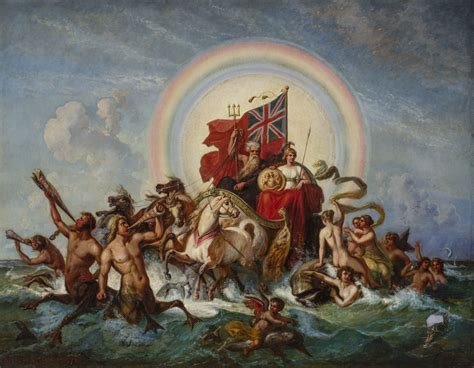
What is Britain’s role in the world?
What should it be?
It has been a century since Britian could claim that she ruled the waves or that she was a major world power. Any remaining pretensions were extinguished by the debacle of the Suez crisis in 1956, consigning both Britain and France to the status of second-tier powers. But despite undoubted sins of the past, Britain has been a force for good and for progress in many spheres of productive human endeavour. What should be it’s role today, having spurned ever-closer union with the EU and increasingly adrift from its erstwhile partner in the post-WWII special relationship? And what of its former empire and the Commonwealth?
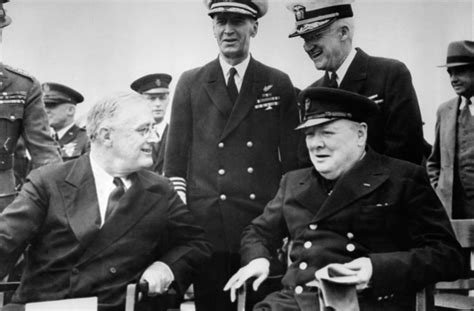
In the shadow of FDR: The Atlantic Charter
Agreed between Roosevelt and Chuchill on a Royal Navy destroyer in a bay in Newfoundland in 1941, teh document that only later become known as the ‘Altantic Charter’ remade the post-WWII world.
In rethinking the role Britain plays in the world and as a leading nation in the liberal democratic West, policy-makers and thinkers in international relations could do a lot worse than consulting that document again. It speaks to what Western liberal deomocracy can and should be. Yet in may areas, we have drifted far from its vision.
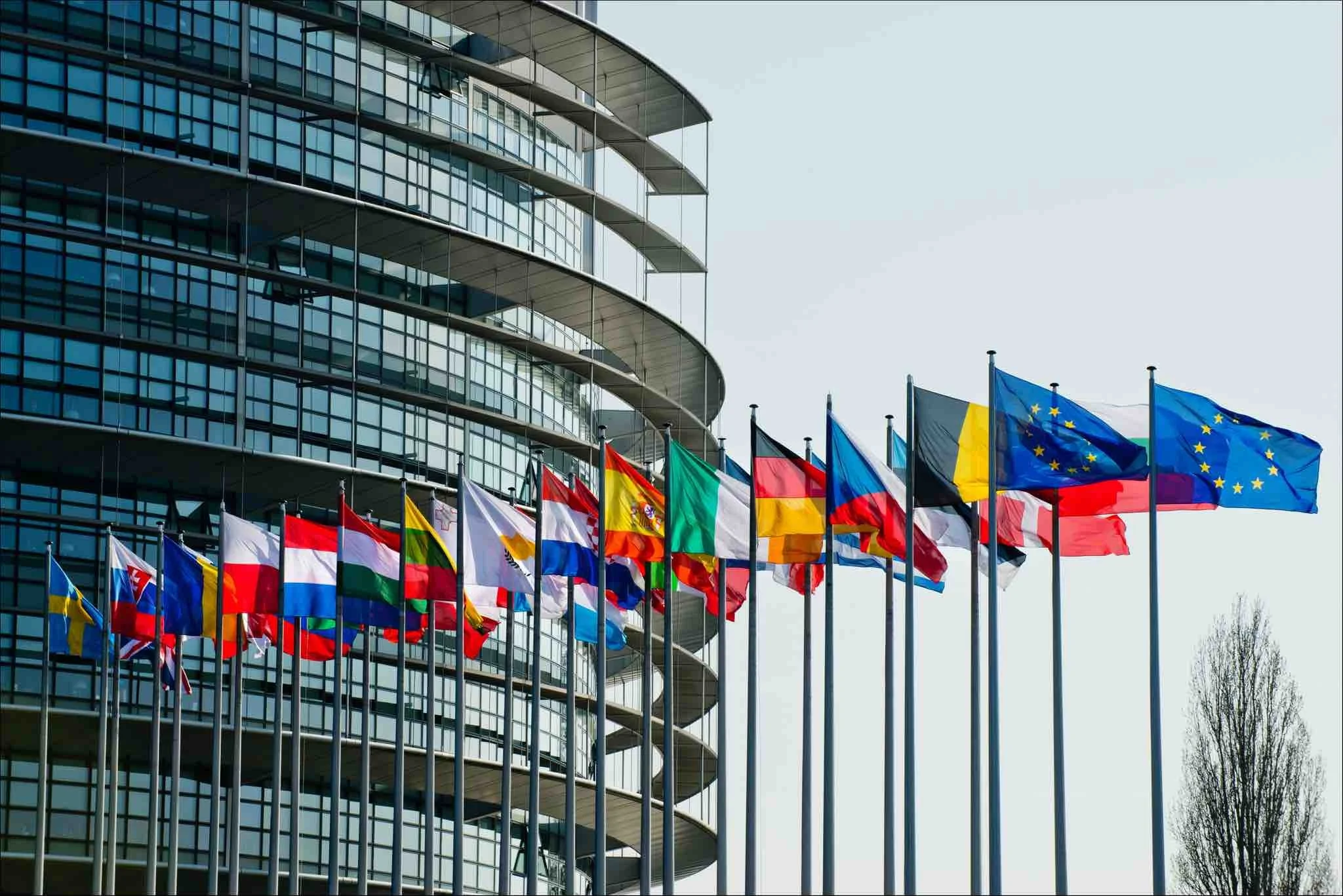
Post-Brexit relations with Europe
Well, we did it. We took out our pistols, took careful aim and shot ourselves directly in the foot, possibly both feet. But unlike continental Europe with its legal system based on the Napoleonic updates of the ancient Roman Civil Code, Britain, legally and constitutionally is different. The Glourious Revolution, or, less dramatically, the post-Commonealth restoration of monarchy in 1688 estalbished the basis of progressive constitutional reform; the law develops progressively and dymanically through stare decisis — the doctine of judicial precedence. All that noted, how should we seek to cohabitate with our phycially closest neighbours and friends.

Five eyes or four eyes?
The most enduring alliance formed during the second world war has been the agreement, initially between, US and British intelligence services, to share intelligence gathering and intelligence gathered. At the time, Britain made the commitment on behalf of its allies of the former Empire also — Canada, Australia and New Zealand. The arrangement remains active and forms the operational basis of security and also military co-operation between the members.
The shock to NATO of American apathy towards Article 5 protections does not extend to the Five-Eyes relationship. Australian intelligence and, to a lesser extent, NZ intelligence gathering, is crucial to the American intelligence apparatus. Pine Gap in Australia’s remote Northern territory, is one of the largest intelligence stations in the world and is operated jointly by Australian and US agencies. However, rogue its President may have gone, the US relies on SIGINT and GEOINT from Pine Gap as crucial part of its ECHELON network and all involved, except perhaps Trump, know it. The arrangement preceded his birth and will outlive him.
What does this relationship tell us about the West and its collaborative global role? As the trading interests of the Five-Eyes participants diverge and the national relationships are strained by the casual abuse of the incumbent US President how much pressure can the relationship survive? The world of the mid-to-late 2020s looks very different from the world of 1943 when the prdecessor of the UKUSA agreement was reached. How must the alliance adapt to prepare for the world of the future?
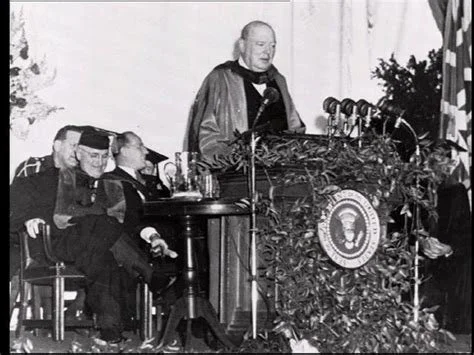
How special is the ‘special relationship’?
First referred to publicly in a speech by former Prime Minister Churchill in a speech at Westminster College in Fulton, Missouri, the home state of US President Harry Truman who accompnied Churchill to Fulton, the special relationship has been a feature of British imagining from that day to this. While there have been warm relations between subsequent US Presidents and British PMs (one thinks of Reagan-Thatcher and Bush-Blair), the relationship has never been represented quite as emphatically in the US media or academic circles; the American position has been considerably more pragmatic, even if it has been strategic and enduring.
The antipathy of the British public to active involvement of UK armed forces in the invasion of and subsequent war in Iraq, based as it was on manufactured intelligence and greatly exaggerated public promouncements of threat to the UK, notably by Tony Blair, and subsequent catastrophic involvement in conflict in Afghanistan, have soured the UK public’s taste for American adventurism. Then came Donald Trump. While it is a natural enough shift of strategic posture to encourage NATO members to invest more heavily in their capabilities within the joint defense agreement, Trump’s theatrical threats and tantrums have only served to weaken European assessments of the commitment of the US to Article 5 of the Treaty. It is at the moment of Europe’s greatest need — with a bellicose Russia threatening Europe’s eastern reaches with open warfare, that Trump has become most unreliable, and directly derogatory of the UK PM, Keir Starmer. Whither the special relationship now?
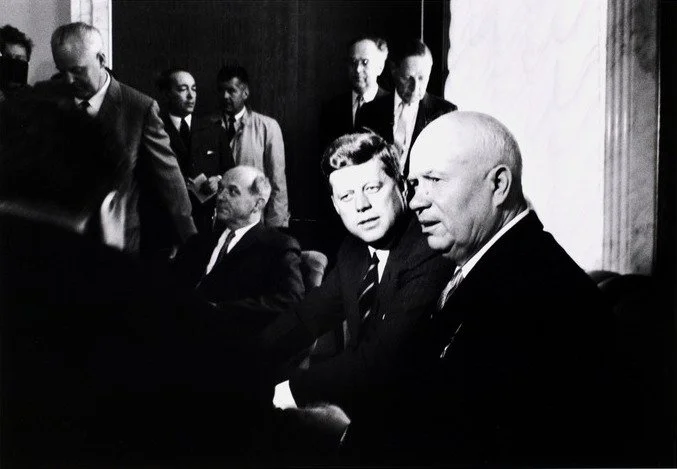
How cold is the Cold War?
Is it really over?
Perhaps, at one point, it was. There was a brief period, following the collapse of the Soviet Union, where it seemed, at least to those of us who paid attention, that the spectre of super-power opposition and nuclear Armageddon had receded. Then came the extra-ordinarily-bungled transition. Giving testimony before a Congressional Committee on Banking and Financial Services in September 1999, US journalist and Russophile, Anne Williamson, described what occurred following the collapse of the Soviet Union at the hands of Russian ‘oligarchs’ and American bankers as the rape of Russia (also in a book by the same name).
No, the cold war didn’t end, it was merely transformed by American greed, short-term thinking, neglest and hubris of the G.W. Bush and Clinton Administrations.
We are still paying the price today. What, if anything, can we do about that now? Acknowlledge it, for one thing.
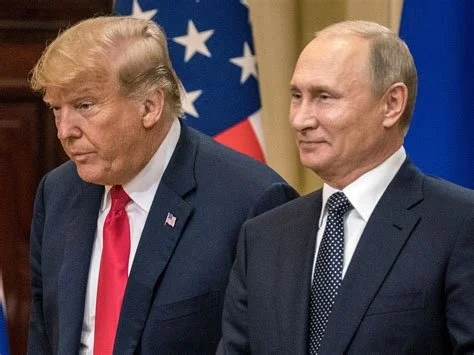
Better than Kasparov, but against a weak opponent
Vladimir Vladimirovich plays chess. Whether he plays it literally on an 8×8 board or only metaaphorically but in real life, he is very good at it. One of his more prominent domestic political opponents, Garry Kasparov, was world chess champion from 1985 to 2000. Yet `Putin, in real lfe, beats him every time.
So too, Donald Trump. Putin makes Trump look like the strategic and tactical featherweight he is. Tactically, Trump, a malignant narcissist, is transactional. Putin as always several moves ahead of him. This has cost the US position and prestige and has cost many Ukrainian lives. The ridiculously celebrated Art of the Deal, ghost written in Trump’s name, tells any observer all you need to know. Winning the next round is everything. But international politics is neither chess nor a boxing match. Until the US can find a commander-in chief capable of thinking beyond his next burger, things will only get worse on the eastern reaches of Europe.
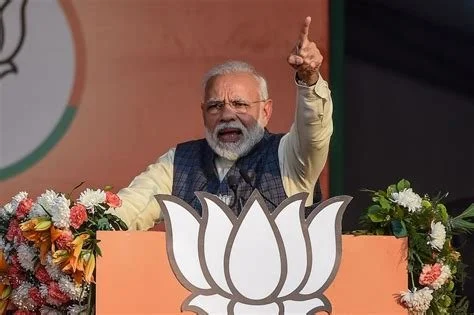
The world’s biggest democracy?
Britain’s biggest friend?
Relations between the world’s most populous country and its former colonial master are complicated. But, despite the enmities of colonial withdrawal and the bloodbath of its aftermath, time has healed many wounds.
Within the upper reaches of both India and Pakistan, there remains a vestigial appreciation of the merits of and affection for Britain as an equal on the world stage.
While bilateral relations between the UK and Pakistan are complicated, they are simpler with India which, since the withdrawal of colonial possession, has been both in letter and (mostly) in spirit a constitutional democracy. But it has not always been a liberal one, especially during the period of the ‘emergency’ (1975-77) and under the influence of a resurgent hindutva nationalism. A freer country practically than it has been at any time since independence, India’s lower chamber (the Lok Sabha) has shown a creeping contempt for the staunch religious and ethnic neutrality of the 1949 consititution. Judicial netrality also has come to be questioned, especially over the Ram Mandir in Ayodhya in Uttar Pradesh, built on the contested site of a former mosque.
What happens in India matters hugely. At present, still, one sixth of the world’s population live in a democratic India. Its thinkers now, as they have throughout even moder history, are mong the most important in the world.
The West must do all conceivably in its power to bring India more forefully in to the orbit of liberal democracies and to recognise both its enormous strengths and opportunities. India can and should be a tremendous force for liberalism in the world. We must both encourage it and help it to realise that potential.
Is NATO broken?
And did Ukraine break it?
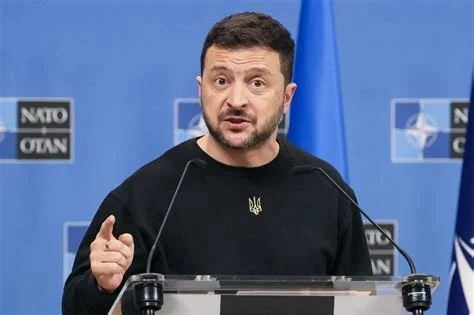
Ironically, following repeated attacks by US President Donald Trump, especially during his first term, NATO is probably more cohesive now that at any time since its creation. Galvanised by the threat from Russia to the Eastern-most flank of Europe, and facing the waivering support of a fickle US Administration,the core NATO countries and its northern and eastern members are committing to expenditure on and involvement in the war in Ukraine with greater resolve than at any previous time. The question is: will it be in time, of adequate quantity and of the requisite quality to bolster the fatigued and frustrated Ukrainian military.
Whatever else it has done, the war in Ukraine has afforded the UK a second chance at establishing an effective working relationship, post-Brexit, with the EU. Despite the putative threat from Russia, maintaining a leadership role in the European efforts to support Ukraine is strongly in the UK’s military and economic interests.
Imagining NATO without the US
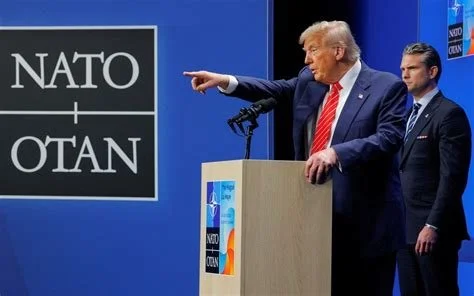
Strengthened by the cohesion of the preceived and evidently real threat posed by Russian invasion of Ukraine, NATO is having to cope with an increasing ambivalent and fickle US commitment to support Ukraine in the conflict. Frustrated by its evident impotence and comprehensively outplayed by the authoritarian Putin regime, the present US Administration is fumbling in mutiple wars and pre-occupied elsehwere.
We don’t really need to imagine a NATO without US engagement; it already a reality. Or is it?
Whatever the timbre of Trump’s erratic rhetoric and juvenile social media outbursts, if a NATO country were to face attack, including by Russia, it could legimately invoke Article 5 mutual defence obligtions. If the US were to fail to respond actively, its credibility as a Western ally would instantly be shredded. It may retain allies in the Arabian Gulf and Israel, but its relations with European allies, at least militarily, would revert purely to a transactional reliance on supply of materiel and residual intelligence cooperation, which may not continue.
Let’s pray we never find out.
Out of aid?
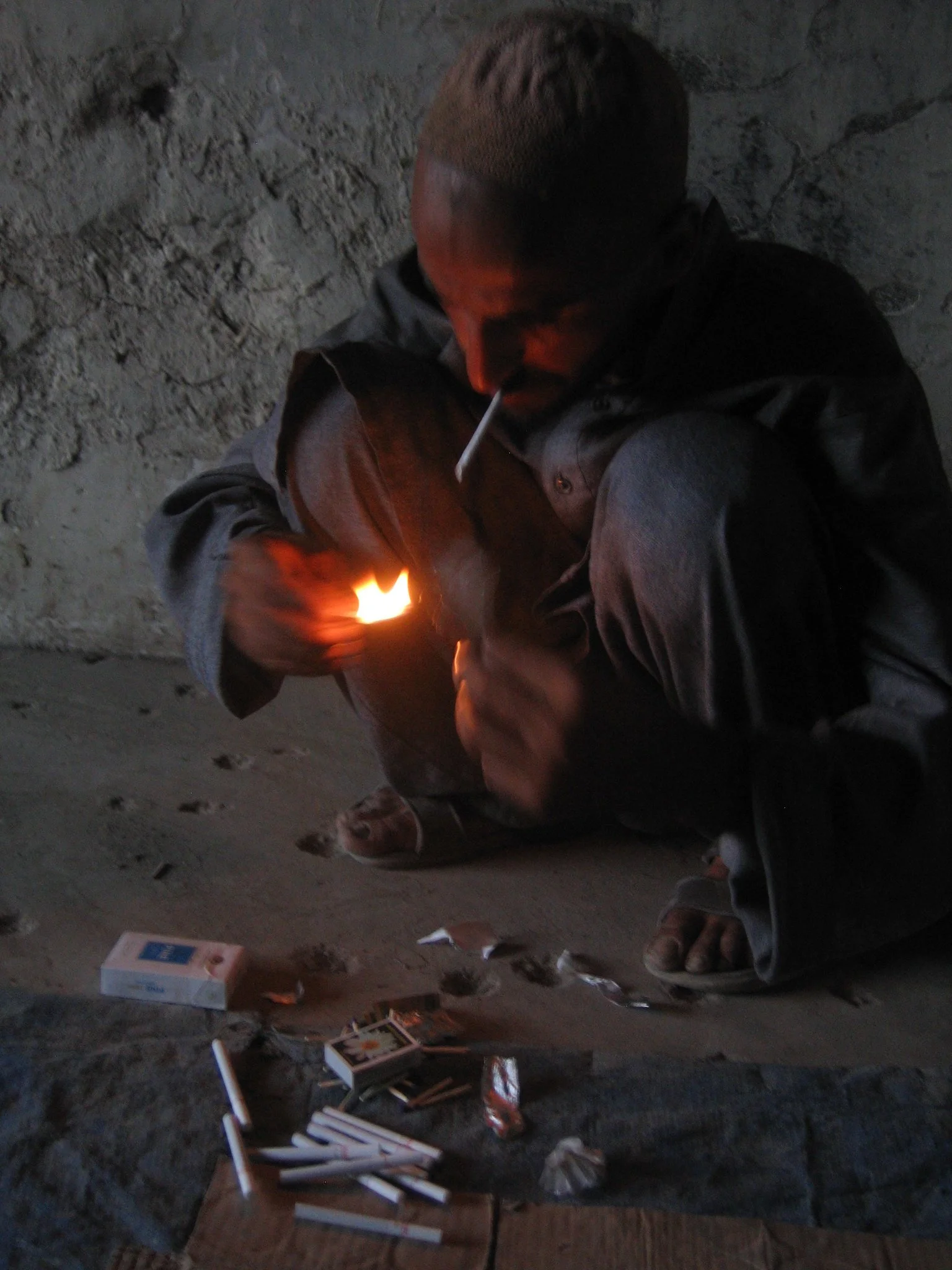
The second Trump Administration has abolished USAID. The UK Government has axed the budget for overseas development aid and stated it will transfer the savings to the defence budget.
This curious and poorly-thought-through. Not because they are flawed decisions, necessarily, but they are mean ones.
Perhaps foreign aid is the transfer of the money of poor people in rich countries to the rich people in poor (and, by implication, corrupt) countries. But if that were the basis of the decision-making, surely more active steps should have been taken to ring-fence the contributions from exposure to corruption. Or perhaps that is the problem. Practically, you cannot. The option is typically to accept and finance the corruption or leave.
However, it seems unlikely that is the basis of retrenchment in aid budgets either. It seems more likely that a growing acceptance of impotence in terms of encouraging ‘civil society’ in beneficiary countries is simply too hard when the local elites do theeir best to disrupt any potential sources of opposition, which is most likely to come from local civil society.
Or is that just cynical?